Introduction of Australian frigates could be substantially delayed
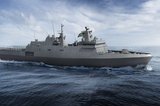
The Hunter class will be an extremely capable warship, but few major Australian procurement projects start smoothly. (Photo: RAN)
While Australian defence officials have not made any official announcement, it seems the Hunter class is facing sizeable delays.


The Royal Australian Navy (RAN) is facing a significant delay before getting its hands on nine Hunter-class frigates being built by BAE Systems in Australia.
The Australian Financial Review reported on 6 July that the project is ‘poised to be pushed back for up to 18 months after the Morrison government agreed to delay the project because of issues with the design’.
The decision had apparently been made the previous week. Furthermore, the auditor-general appears set to launch an audit of the programme this year. In July 2020 the frigate project was added to the Projects of Interest list,
Our news & analysis is now part of Defence Insight®
A Basic-level or higher Defence Insight subscription is now required to view this content.



More from Naval Warfare
-
![Frigates and submarines anchor Brazilian naval modernisation worth US$5.52 billion]()
Frigates and submarines anchor Brazilian naval modernisation worth US$5.52 billion
Shipbuilding programmes established over the past decade are setting Brazil's course towards having one of the most modern navies in the region.
-
![Shoreline vulnerability drives Gulf interest in USV networks]()
Shoreline vulnerability drives Gulf interest in USV networks
Ukraine’s combat-proven Magura uncrewed surface vessel is attracting Gulf state interest as the Iran war exposes gaps in layered maritime air defence, raising questions about whether low-cost attritable systems can gain a foothold in a procurement culture historically drawn to high-end Western platforms.
-
![Partnerships will be critical for future projects at Latin American shipyards]()
Partnerships will be critical for future projects at Latin American shipyards
Multiple Latin American navies are modernising their fleets by prioritising domestically manufactured surface vessels and even submarines via international partnerships.
-
![Sweden swayed by speed to capability in French frigate win]()
Sweden swayed by speed to capability in French frigate win
Naval Group has secured a contract to supply four Frégate de Défense et d’Intervention frigates to the Royal Swedish Navy, extending the French naval industry’s reach into Northern Europe and showing why speed to capability has become the defining criterion in today’s defence procurement contests.