Indra tests Targus critical systems


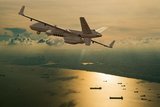
Indra, with its partner Gaerum, has started simulated flight tests of the Targus optionally piloted vehicle (OPV) to validate the design of the aircraft’s critical systems, the company announced on 11 January.
The companies have begun studying the flight control, navigation and mission systems at Rozas’ Center for Research and Experimentation in Castro de Rei, Spain.
Indra uses an advanced simulation methodology known as software-in-the-loop/hardware-in-the-loop that makes aircraft systems believe that they are actually in the air.
Electronic system behaviour is being tested in an environment set up to be 100% realistic. The results of the numerical simulations previously performed in the lab are now being fine-tuned and once the correlation between the behaviour of the system in the simulator and in the air is confirmed with a flight test, all these simulation hours will be regarded as real flight hours.
Once the tests with these components are completed, the next step will be to integrate them into the experimental aircraft for the development of the Targus. A battery of tests in the simulator will optimise the algorithms of the flight control and navigation system. Once these tests are passed, the flight experimentation stage will be undertaken.
Indra is also working on the integration of the ground segment, which will operate the aircraft from the ground and will control all its mission equipment.
The Targus aircraft is equipped with advanced surveillance technology to conduct missions related to maritime surveillance; to support salvage and rescue missions, forest surveillance and fire-fighting, and to monitor land use and historical heritage sites.

You may also like

More from Naval Warfare
-
![How could Rheinmetall’s GMF 140 fit with ongoing programmes in North America?]()
How could Rheinmetall’s GMF 140 fit with ongoing programmes in North America?
With Canada committed to its River-class replacement and the USN pursuing a lower-cost frigate, Rheinmetall will need to demonstrate where the GMF 140 can fill a capability gap in the North American fleet.
-
![Australian industry programme builds pipeline for Virginia-class sustainment]()
Australian industry programme builds pipeline for Virginia-class sustainment
Australian businesses can now bid to support Virginia-class submarine sustainment in Western Australia, as momentum around the Henderson Defence Precinct also builds.
-
![South Korea, Japan and Turkey vie for US shipbuilding access in future frigate contest]()
South Korea, Japan and Turkey vie for US shipbuilding access in future frigate contest
Washington’s search for a foreign-built frigate could hand South Korea, Japan and Turkey a larger prize than a double-hull order: a foothold inside the US shipbuilding industrial base.
-
![Russia’s uncrewed boat portfolio hints at future naval demand]()
Russia’s uncrewed boat portfolio hints at future naval demand
Ukrainian intelligence has catalogued more than 20 Russian uncrewed surface vessels, revealing a portfolio weighted towards mine warfare and logistics, with implications for Western naval investment.
-
![Ukraine’s new long-range 12m autonomous vessel can deploy other drones]()
Ukraine’s new long-range 12m autonomous vessel can deploy other drones
Ukraine’s UForce unveiled the MV11 uncrewed surface vessel, designed to launch and support other naval drones at sea, fuelling debate over the future of autonomous maritime task groups.