Indonesia resurrects its stealthy trimaran
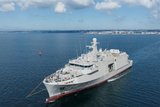
PT Lundin launched the wave-piercing trimaran KRI Golok for the Indonesian Navy in August. (TNI-AL)
The Indonesian Navy has vast needs for more modern vessels. More are being added all the time, and soon it will be the turn of a stealthy catamaran.


The Indonesian Navy (TNI-AL) is looking forward to receiving a fast missile attack trimaran, with the future KRI Golok launched in Indonesia by shipbuilder PT Lundin on 21 August.
A first version of the design, KRI Klewang (625), was destroyed by fire a month after being launched in August 2012, so the advent of Golok (with pennant number 688) marks a revival of this type that employs infused vinyl ester carbon fibre for the hull.
The sleek wave-piercing trimaran was launched at the shipyard of PT Lundin (also known as North Sea Boats) in Banyuwangi, East Java. Adm Yudo Margono,
Our news & analysis is now part of Defence Insight®
A Basic-level or higher Defence Insight subscription is now required to view this content.


More from Naval Warfare
-
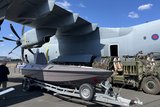
![A400M trial demonstrates airborne deployment of uncrewed surface vessel]()
A400M trial demonstrates airborne deployment of uncrewed surface vessel
Kraken Technology Group’s A400M airdrop of a K3 Scout uncrewed surface vessel points to a new way for navies to insert USVs into contested waters, bypassing ports and motherships.
-
![From the seas to the web: the changing shape of UK defence in Southeast Asia]()
From the seas to the web: the changing shape of UK defence in Southeast Asia
As his final engagement before leaving his post as the head of the British defence staff for Southeast Asia and defence adviser to Singapore, Brigadier Eddie Maskell-Pedersen spoke with Shephard about maritime security, cyber cooperation and long-term partnerships.
-
![Naval primes dive into an underwater acquisition gold rush]()
Naval primes dive into an underwater acquisition gold rush
A cluster of acquisitions by Fincantieri, Thales, Lockheed Martin and Rheinmetall points to a race to secure underwater warfare, autonomy and sensing capability.
-
![Baltic naval priorities shift towards mine warfare and versatile platforms]()
Baltic naval priorities shift towards mine warfare and versatile platforms
Baltic states are investing in mine warfare, uncrewed systems and multirole platforms as major warship purchases remain scarce, industry sources indicate.