Indo-Pacific 2022: Australia is set to trigger MCM tender
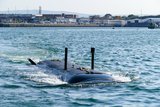
The French firm ECA Group is one contender proffering its MCM solutions to Australia. (ECA Group)
Three industry contenders have emerged for the Australian navy’s quest for a new unmanned MCM system.


An important theme at Indo-Pacific 2022 in Sydney was a new mine countermeasure (MCM) and military survey capability for the Royal Australian Navy (RAN), with contenders presenting their credentials before an RfT is issued at the end of May.
This effort falls under Project Sea 1905 Phase 1. Interestingly, this programme number cleverly represents the Roman numerals MCMV.
In April 2019, Sea 1905 replaced Sea 1179 Phase 1, when it was decided not to extend the life of Huon-class minehunters (of which four of six remain, with all to be retired by the middle of this decade).
Instead, the
Our news & analysis is now part of Defence Insight®
A Basic-level or higher Defence Insight subscription is now required to view this content.



More from Naval Warfare
-
![From the Baltic to the Gulf: where USV procurement is heading next]()
From the Baltic to the Gulf: where USV procurement is heading next
Saildrone’s new Copenhagen base is one sign of a larger shift, as navies globally turn to uncrewed vessels for surveillance and mine clearance.
-
![Israeli Navy looks to expand as war reshapes future force requirements]()
Israeli Navy looks to expand as war reshapes future force requirements
Israel’s navy is preparing for a larger and more technically diverse role, but its ambitions could be impacted by supply chain restrictions, accelerating demand for domestic naval production as well as autonomous maritime capabilities.
-
![Quantum sensing gathers pace as navies eye undersea advantage]()
Quantum sensing gathers pace as navies eye undersea advantage
As AI dominates defence conversations, industry increasingly points to quantum sensing as the technology set to change submarine and uncrewed underwater vehicle operations.