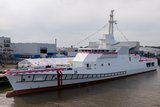
Indian Navy’s DSRV in new testing


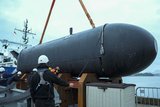
JFD has completed sea trials of the Deep Search and Rescue Vehicle (DSRV) being delivered to the Indian Navy.
The DSRV carried out underwater mating with a submarine at a depth of over 300ft, followed by a target mating and hatch opening at 45 degrees. On successful mating with the submarine, personnel were safely transferred from the submarine to the DSRV.
Designed to facilitate the rescue of personnel from a disabled submarine at sea, the DSRV already successfully completed harbour trials, and has now replicated all operating conditions of a real submarine rescue operation.
JFD is delivering two complete third-generation submarine rescue systems to the navy under a £193 million contract. The system includes launch and recovery systems equipment, transfer under pressure systems, logistics and support equipment, and a 25-year all inclusive annual maintenance contract.
Ben Sharples, India DSRV project director, said: ‘The Indian Navy west coast-based rescue team, who will operate the system when in service, were active participants throughout this phase of the trials, ensuring they are equipped with the skills and expertise to conduct safe and efficient submarine rescue operations, should the need ever arise.
‘The sea trials of the DSRV has ushered in a niche capability into the Indian Navy. The DSRV, which is operated by a crew of three, can rescue 14 personnel from a disabled submarine at one time. These sea trials have proven the newly inducted DSRV’s ability to undertake rescue operations from disabled submarines at sea and has provided the Indian Navy with a critical capability.’

You may also like

More from Naval Warfare
-
![Argentina’s submarine and frigate acquisitions resurface with $3.5bn funding plan]()
Argentina’s submarine and frigate acquisitions resurface with $3.5bn funding plan
Buenos Aires set out foreign loans worth $3.5 billion in its draft 2027 budget, opening a contest in which Naval Group and TKMS could lead the field.
-
![AUKUS heavyweight torpedo test raises questions over future armed UUV requirements]()
AUKUS heavyweight torpedo test raises questions over future armed UUV requirements
A heavyweight torpedo firing from the Royal Navy’s uncrewed submarine XV Excalibur suggests a shift beyond surveillance, with allied navies eyeing strike roles for large autonomous undersea vessels.
-
![Industrial teams prepare roadmap for Indonesia aircraft carrier transformation]()
Industrial teams prepare roadmap for Indonesia aircraft carrier transformation
Fincantieri and PT PAL have agreed on a framework to modernise the former Giuseppe Garibaldi, with drones, communications and broader Italian–Indonesian industrial ties involved.
-
![Five years on: where could opportunities emerge next for AUKUS Pillar II?]()
Five years on: where could opportunities emerge next for AUKUS Pillar II?
Payload commonality, combat systems and electronic warfare are emerging as likely priorities as the trilateral partnership balances building submarines with sharing industrial ecosystems.
-
![Singapore expands maritime presence with future-ready Sentinel OPV]()
Singapore expands maritime presence with future-ready Sentinel OPV
Singapore is building space for uncrewed systems and future technologies into its new Sentinel-class OPVs, reflecting a wider move towards adaptable vessels capable of maintaining persistent maritime presence.