Indian Navy orders two new warship classes from local shipbuilders
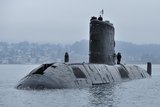
The 11 Next-Generation Offshore Patrol Vessels are likely to be similar in specification to the OPV INS Saryu pictured here. (Photo: Indian Embassy in Thailand)
Seventeen new ships, made up of offshore patrol vessels and missile vessels, are on the way for the Indian Navy.


On 31 March, India’s MoD signed contracts for 17 new warships – 11 Next Generation Offshore Patrol Vessels and six Next Generation Missile Vessels – for the Indian Navy (IN).
Both types will be designed and constructed wholly in India, with Garden Reach Shipbuilders & Engineers (GRSE) and Goa Shipyard Limited (GSL) responsible for the NGOPVs, and Cochin Shipyard Limited (CSL) undertaking work on the NGMVs.
The OPV project is valued at INR97.81 billion ($1.19 billion). GSL will construct seven of them, while GRSE will complete the remaining four. The first delivery should occur in September 2026.
Their indigenous content
Our news & analysis is now part of Defence Insight®
A Basic-level or higher Defence Insight subscription is now required to view this content.

More from Naval Warfare
-
![A400M trial demonstrates airborne deployment of uncrewed surface vessel]()
A400M trial demonstrates airborne deployment of uncrewed surface vessel
Kraken Technology Group’s A400M airdrop of a K3 Scout uncrewed surface vessel points to a new way for navies to insert USVs into contested waters, bypassing ports and motherships.
-
![Babcock onshores 85% of Canada’s submarine supply chain as it eyes future CPSP programme]()
Babcock onshores 85% of Canada’s submarine supply chain as it eyes future CPSP programme
By moving most of the Royal Canadian Navy’s submarine supply chain into Canada, Babcock Canada is driving to strengthen sovereign sustainment capabilities while preparing to compete to maintain the future Canadian Patrol Submarine Project.
-
![Naval primes dive into an underwater acquisition gold rush]()
Naval primes dive into an underwater acquisition gold rush
A cluster of acquisitions by Fincantieri, Thales, Lockheed Martin and Rheinmetall points to a race to secure underwater warfare, autonomy and sensing capability.
-
![Baltic naval priorities shift towards mine warfare and versatile platforms]()
Baltic naval priorities shift towards mine warfare and versatile platforms
Baltic states are investing in mine warfare, uncrewed systems and multirole platforms as major warship purchases remain scarce, industry sources indicate.