India opens Naval Air Enclave


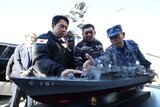
A new Naval Air Enclave (NAE) has been opened at Cochin International Airport (CIAL), India, the national Ministry of Defence announced on 5 October.
The NAE will facilitate the operations of India’s P-8I Neptune aircraft from CIAL to enhance surveillance of the area around the western coast and the Minicoy and Lakshadweep islands. The enclave will be used to operate and house aircraft which cannot be operated from INS Garuda, an Indian naval air station located near Kochi, due to inadequate runway length.
The Indian Navy acquired eight P-8I aircraft under a contract signed in 2009. The aircraft is a customised variant of the Boeing P-8 Poseidon, designed for anti-submarine warfare, anti-surface warfare, shipping interdiction and electronic signals intelligence roles.
The Indian Navy stood up its first P-8I squadron in November 2015, designated Indian Naval Air Squadron 312A, at Rajali Naval Air Station in Tamil Nadu province. All eight aircraft are currently operational with the navy.
Related Equipment in Defence Insight


More from Naval Warfare
-
![AUKUS advance on UUVs contrasts with Virginia-class compromise]()
AUKUS advance on UUVs contrasts with Virginia-class compromise
The AUKUS partnership is accelerating uncrewed undersea capability while its submarine arm inches forward, and Australia’s decision to settle for three in-service Virginia-class boats raises questions about industrial risk, dependency and whether Pillar II may deliver meaningful capability long before Pillar I can.
-
![Peru partnership may serve as a template for South Korean naval exports into South America]()
Peru partnership may serve as a template for South Korean naval exports into South America
With a growing pipeline of naval modernisation programmes in South America, South Korean companies could be set to expand their presence in the region as recent contract wins highlight growing collaboration.
-
![AUKUS plan B? Japan’s submarines stopgap gains traction]()
AUKUS plan B? Japan’s submarines stopgap gains traction
Australia’s Collins-class life of type extension has revived debate over whether Canberra needs a contingency plan as risks to every stage of the AUKUS pathway mount. With Japan newly open to exports, the case for a diesel-electric stopgap is gaining traction.
-
![Seoul’s SSN programme launch raises questions on fuel, tech and build location]()
Seoul’s SSN programme launch raises questions on fuel, tech and build location
Seoul has unveiled its “Jangbogo-N Project” to develop domestically built, nuclear-propelled attack submarines in close coordination with Washington, marking an escalation of the Republic of Korea’s deterrence posture against Pyongyang’s undersea nuclear capabilities.
-
![Tokyo’s naval export drive gains strategic depth in Southeast Asia]()
Tokyo’s naval export drive gains strategic depth in Southeast Asia
Indonesia’s consideration of Mogami-class frigates points to a widening export opportunity for Tokyo across Southeast Asia and raises the prospect of the Mogami becoming the region’s default mid-tier surface combatant.