How Canada plans to use the River-class programme to revitalise its defence industry
HMCS Fraser keel-laying ceremony in Irving’s Halifax Shipyard. (Photo: Irving Shipbuilding)
The Canadian DND estimates that the construction of destroyers will annually inject C$720 million (US$515 million) into the country’s GDP.


The Canadian Department of National Defence (DND) reached a critical milestone last week in the River-class programme with the first destroyer, HMCS Fraser, having its keel laid. More than marking the beginning of the vessel’s construction, it represents a boost in the country’s manufacturing capacities.
The DND estimates that, between 2025 and 2039, the River Class Destroyer (RCD) implementation will contribute almost C$720 million (US$515 million) to Canada’s gross domestic product (GDP) and “support approximately 5,250 jobs annually”.
Conducted under Canada’s National Shipbuilding Strategy (NSS), the effort has a total estimated cost of C$60 billion. The government plans to acquire up to 15 RCDs, making it the largest and most complex naval construction effort undertaken by the country since the Second World War.
Related Articles
Royal Canadian Navy advances with the construction of its first River-class destroyer
How Canada is preparing the future River-class destroyers to endure uncrewed threats
First Canadian River-class destroyer to have its keel laid in June
With the HMCS Fraser scheduled for delivery in the 2030s, the River-class programme is intended to resonate for many more years since it will require decades of construction, maintenance, upgrades and sustainment.
Far-reaching effects of the programme
Seen as a strategic advantage for the country, the construction of destroyers also seeks to make the Canadian supply chain more resilient and reliable for future ship maintenance while reducing dependence on foreign production lines.
For that matter, the initiative is expected to bolster domestic shipbuilding expertise, expand skilled employment and improve the nation’s ability to locally produce complex military vessels.
David J McGuinty, Minister of National Defence, stated that the concrete start of construction of the first River-class destroyer is “an encouraging step forward in strengthening” the national resiliency and revitalising the domestic shipbuilding industry.
For Minister of Industry Mélanie Joly, it marks a milestone in the government’s plans “to protect well-paying jobs across the country, reinforce our economic security and ensure Canada is equipped to meet the challenges of a rapidly changing global landscape.”
From the industry perspective, the manufacturing of destroyers will generate a significant economic impact. The RCDs supplier, Irving Shipbuilding, stated that its “supply chain stretches from coast-to-coast,” includes nearly 700 companies across Canada, and supports “the NSS to generate almost C$11.3 billion in labour income”.
The contractor added that National Shipbuilding Strategy efforts sustain across the country an average of 10,600 full-time jobs annually, consisting of positions related to naval engineering, advanced welding, systems integration and ship maintenance.
“In total, Irving Shipbuilding programmes under the NSS are estimated to raise over C$6.3 billion in taxes, fees and charges for all three levels of government between 2013 and 2027, with nearly C$17 billion contributed to Canada’s GDP,” the supplier remarked.
Apart from the RCDs, the company is also building two Arctic and Offshore Patrol Ships (AOPS) for the Canadian Coast Guard.
Plugging a capability gap in the RCN’s inventory
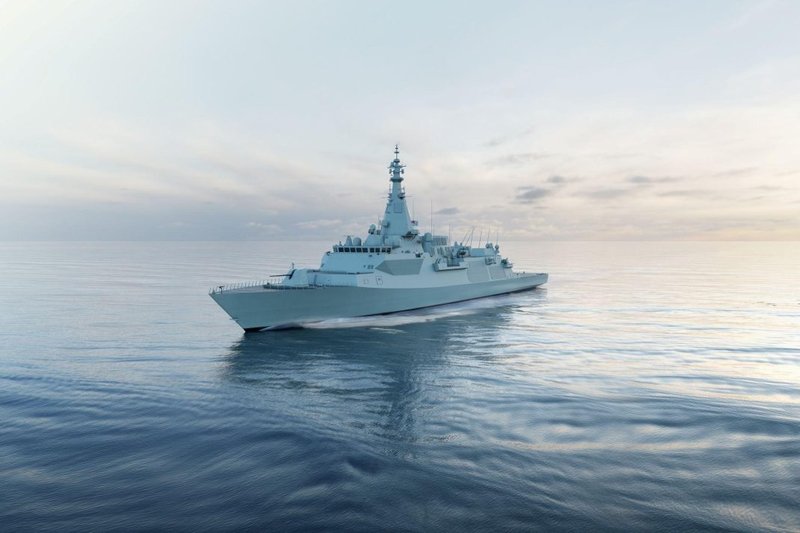
The future River-class fleet is intended to be the backbone of Canada’s maritime combat capability. Based on the Type 26 design developed by BAE Systems, the destroyer has been designed to provide advanced anti-submarine warfare, air defence and multi-mission capabilities.
The new destroyers have also been engineered to be deployed in crewed/uncrewed missions and host and operate robotic systems.
For the Royal Canadian Navy (RCN), this means a capability leap as the RCDs will substitute the Iroquois and Halifax classes.
Iroquois destroyers entered service between 1972 and 1973 and were phased out from 2005 to 2017. Meanwhile, Halifax frigates were built in the 1990s and have been in operation for more than 30 years. Those platforms are due to be retired in the 2030s.
According to the DND, consolidating capabilities in a single class will “streamline training and maintenance and enable the RCN to respond to diverse and evolving threats in open oceans and highly complex maritime environments”.
Meanwhile, RCN Commander VAdm Angus Topshee noted the service “urgently needs” the RCDs to protect Canadian waters and interests “in an increasingly unpredictable and threatening world”.
Related Programmes in Defence Insight
Canadian Surface Combatant/River Class (4-15) [Canada]
Canadian Surface Combatant/River Class (1-3) [Canada]
Related Equipment in Defence Insight




More from Naval Warfare
-
![How could Rheinmetall’s GMF 140 fit with ongoing programmes in North America?]()
How could Rheinmetall’s GMF 140 fit with ongoing programmes in North America?
With Canada committed to its River-class replacement and the USN pursuing a lower-cost frigate, Rheinmetall will need to demonstrate where the GMF 140 can fill a capability gap in the North American fleet.
-
![Australian industry programme builds pipeline for Virginia-class sustainment]()
Australian industry programme builds pipeline for Virginia-class sustainment
Australian businesses can now bid to support Virginia-class submarine sustainment in Western Australia, as momentum around the Henderson Defence Precinct also builds.
-
![South Korea, Japan and Turkey vie for US shipbuilding access in future frigate contest]()
South Korea, Japan and Turkey vie for US shipbuilding access in future frigate contest
Washington’s search for a foreign-built frigate could hand South Korea, Japan and Turkey a larger prize than a double-hull order: a foothold inside the US shipbuilding industrial base.
-
![Japan’s FY2027 budget bets on stand-off systems to offset demographic decline]()
Japan’s FY2027 budget bets on stand-off systems to offset demographic decline
Japan’s FY2027 defence budget backs stand-off strike, a 17-aircraft MQ-9B buy and a declared bid to lead the world in uncrewed maritime assets, alongside new frigates, submarines and support ships.