HNLSM Snellius returns to service
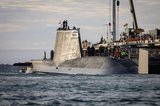
The delivery of HNLMS Snellius, HNLMS Pelikaan, HNLMS Luymes brings to a successful conclusion a series a large-scale mid-life upgrade projects. (Photo: Damen Shipyards)
Damen Shipyards has returned the HNLMS Snellius to the Royal Netherlands Navy following a successful modernisation programme.


Damen Shipyards Den Helder has completed maintenance and modernisation work on HNLSM Snellius.
This modernisation programme functioned as Snellius’ midlife upgrade.
The hydrographic survey vessel required a complex and diverse scope of work, which has taken almost a year to complete.
The Defence Material Organisation of the Dutch Ministry of Defence and the Directorate for Material Conservation were responsible for the major maintenance work.
They commissioned the shipyard in Den Helder to carry out the midlife update and the necessary multi-annual maintenance simultaneously.
The assignment was carried out in close collaboration with numerous partners from the Durch maritime industry, such as Nevesbu, Wartsila, Braspenning, Eekels, RH Marine, Bakker Sliedrecht and Kongsberg.
Many of the platforms and systems were replaced or overhauled during the project. Some works were also carried out to prepare the fifteen-year-old vessel for the second half of its lifecycle.
Following the completion of the work, the vessel underwent an extensive test period and is now ready to perform hydrographic work for the RNLS.
HNLSM Snellius will return to its duty mapping the seabed, particularly in the North Sea and the Caribbean.




More from Naval Warfare
-
![Five years on: where could opportunities emerge next for AUKUS Pillar II?]()
Five years on: where could opportunities emerge next for AUKUS Pillar II?
Payload commonality, combat systems and electronic warfare are emerging as likely priorities as the trilateral partnership balances building submarines with sharing industrial ecosystems.
-
![From the Baltic to the Gulf: where USV procurement is heading next]()
From the Baltic to the Gulf: where USV procurement is heading next
Saildrone’s new Copenhagen base is one sign of a larger shift, as navies globally turn to uncrewed vessels for surveillance and mine clearance.
-
![Quantum sensing gathers pace as navies eye undersea advantage]()
Quantum sensing gathers pace as navies eye undersea advantage
As AI dominates defence conversations, industry increasingly points to quantum sensing as the technology set to change submarine and uncrewed underwater vehicle operations.