FREMM Aquitaine continues verification test firings


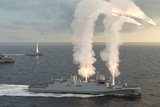
The frigate Aquitaine, a part of the multi-mission frigate program (FREMM), fired an Exocet MM40 surface-to-surface missile on 12 May and a naval cruise missile on 19 May at a DGA missile testing centre off Levant Island.
These tests marked the first time that a European surface ship has fired a European cruise missile. The firings were prepared by the DGA teams, the French Navy, missile manufacturer MBDA, and DCNS. They were held as part of the verification of the FREMMs’ technical capabilities before they enter active service.
The firing of these missiles marks a major milestone after the successful firing of an Aster 15 anti-aircraft missile in 2013 and the commissioning of the MU 90 lightweight torpedo on the Caiman marine helicopter on 13 March.
FREMMs are heavily-armed warships with naval cruise missiles, Exocet MM40 anti-ship missiles, Aster anti-aircraft missiles and MU90 anti-submarine torpedoes. They can accommodate a Caiman marine helicopter, special forces and their equipment. A total of six FREMMs are due to be delivered before mid-2019.
Related Equipment in Defence Insight

You may also like
More from Naval Warfare
-
![How France’s SNLE 3G programme is reshaping the naval nuclear industrial base]()
How France’s SNLE 3G programme is reshaping the naval nuclear industrial base
Extending far beyond a four-submarine replacement programme, France’s ballistic missile submarine effort is a decades-long industrial initiative designed to preserve the country’s ability to build and sustain nuclear-powered strategic platforms.
-
![China’s mineral processing dominance exposes naval supply chain vulnerabilities]()
China’s mineral processing dominance exposes naval supply chain vulnerabilities
Competition for critical minerals, and China’s dominance of their processing, is emerging as a decisive factor in future naval procurement programmes.
-
![Suppliers await next step in Australia’s mine warfare transition]()
Suppliers await next step in Australia’s mine warfare transition
Australia’s mine countermeasure capability remains in flux as the Huon-class nears retirement, but accelerated investment in autonomous systems is opening a path for industry.
-
![Can the US Navy ask Indo-Pacific allies to do more while training with them less?]()
Can the US Navy ask Indo-Pacific allies to do more while training with them less?
As the Iran War draws US ships and marine corps units away from the Indo-Pacific, curtailed exercises and a temporary carrier gap are exposing tensions between Washington’s demand for more self-reliant allies and the joint training needed to realise that ambition.
-
![How could Rheinmetall’s GMF 140 fit with ongoing programmes in North America?]()
How could Rheinmetall’s GMF 140 fit with ongoing programmes in North America?
With Canada committed to its River-class replacement and the USN pursuing a lower-cost frigate, Rheinmetall will need to demonstrate where the GMF 140 can fill a capability gap in the North American fleet.