French Navy tests Aster 30 missile


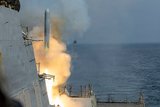
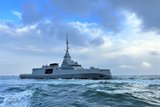
The French air defence frigate Chevalier Paul carried out test firing of the Aster 30 surface to air missile on 13 January. The test was conducted in co-ordination with the DGA.
The tests were conducted to explore the outer limits of the field of discrimination of the ship’s air-defence system and weapons, and namely to distinguish two targets - a friendly aircraft and an enemy one flying close to each other - and to engage the latter.
The firing confirmed the capabilities of the ship’s area air defence system.
With this success, the Chevalier Paul and her on-board Caiman marine helicopter are ready to escort aircraft carrier battle groups as part of its missions.
Related Equipment in Defence Insight

You may also like
More from Naval Warfare
-
![Kraken’s Royal Navy USV contract signals next step in crewed-uncrewed integration]()
Kraken’s Royal Navy USV contract signals next step in crewed-uncrewed integration
The UK Royal Navy’s rapid procurement of uncrewed platforms aligns with the force’s strategic shift towards a fleet better equipped to handle modern threats.
-
![HMS Anson’s milestone stay in Australia cut short during AUKUS deployment]()
HMS Anson’s milestone stay in Australia cut short during AUKUS deployment
The Astute-class submarine’s visit to Australia was the first time maintenance activity on a UK Royal Navy nuclear submarine had been carried out in the country.
-
![How Operation Epic Fury could reduce US readiness to face China]()
How Operation Epic Fury could reduce US readiness to face China
The offensive against Iran could impact training and maintenance cycles and accelerate the degradation of the US arsenal on top of depleting Washington’s stockpiles.
-
![UK Royal Navy explores modular counter-drone capabilities for future hybrid fleet]()
UK Royal Navy explores modular counter-drone capabilities for future hybrid fleet
The UK MoD is scoping out systems to counter the growing threat of uncrewed aerial systems, with a focus on low-cost modularity and speed to field.
-
![US Pentagon claims to have severely damaged Iranian capabilities, promises to increase attacks]()
US Pentagon claims to have severely damaged Iranian capabilities, promises to increase attacks
US military authorities claim to have sunk 20 Iranian vessels and destroyed Tehran’s Air Force, with the Pentagon making plans to send additional assets to the region.