First SM-2 from restarted production line tested


The first SM-2 surface-to-air missile from Raytheon’s restarted production line has been tested by the company and the US Navy.
During the test, the SM-2 Block IIIB missile launched, flew and provided accurate telemetry data to the range, and engaged an airborne navy target.
SM-2 is designed to enable navies to defend against anti-ship missiles and aircraft.
The production line was restarted in June 2017 to meet global demand. The programme invested in new equipment and improved manufacturing processes to increase efficiencies.
Mitch Stevison, Raytheon strategic and naval systems vice president, said: ‘The SM-2 is in high demand because of its advanced capabilities and history of more than 2,700 successful flight tests from US Navy and international ships. Navies worldwide have relied on this missile and it will continue to provide fleet protection for decades to come.’
Related Equipment in Defence Insight

More from Naval Warfare
-
![US Navy $76.6bn award provides stability for submarine production]()
US Navy $76.6bn award provides stability for submarine production
The US Department of War’s US$76.6 billion Columbia-and Virginia-class submarine contract gives industry demand certainty as Washington seeks to rebuild its shipbuilding base.
-
![US Navy begins SPY-6(V)4 radar testing ahead of first Arleigh Burke destroyer backfit]()
US Navy begins SPY-6(V)4 radar testing ahead of first Arleigh Burke destroyer backfit
Wallops Island trials will validate the next-generation radar's combat system integration before its installation aboard USS Pinckney, the first Flight IIA destroyer to receive the SPY-6(V)4 upgrade.
-
![Hanwha Ocean deepens US ties and eyes Saudi submarine prospect after Canada setback]()
Hanwha Ocean deepens US ties and eyes Saudi submarine prospect after Canada setback
Hanwha Ocean is deepening ties with the US and eyeing a submarine opportunity in Saudi Arabia, as South Korea looks to convert its Canadian defeat into export momentum.
-
![A400M trial demonstrates airborne deployment of uncrewed surface vessel]()
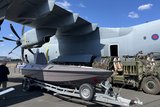
A400M trial demonstrates airborne deployment of uncrewed surface vessel
Kraken Technology Group’s A400M airdrop of a K3 Scout uncrewed surface vessel points to a new way for navies to insert USVs into contested waters, bypassing ports and motherships.
-
![Babcock onshores 85% of Canada’s submarine supply chain as it eyes future CPSP programme]()
Babcock onshores 85% of Canada’s submarine supply chain as it eyes future CPSP programme
By moving most of the Royal Canadian Navy’s submarine supply chain into Canada, Babcock Canada is driving to strengthen sovereign sustainment capabilities while preparing to compete to maintain the future Canadian Patrol Submarine Project.