Europe plans progress on semi-autonomous modular naval vessel
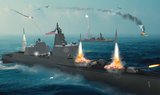
The project will attempt to develop a prototype semi-autonomous vessel by 2027. (Image: ECDI)
The pan-European project plans to develop a a new vessel architecture, create and test the physical prototype of the vessel by the end of 2027, and develop a data-centric autonomous ship architecture.


A European coalition has started work on a €95 million (US$103 million) four-year programme to develop a prototype semi-autonomous modular vessel which can be adapted for a range of missions.
The Estonian Centre for Defence Investments (ECDI) and Baltic WorkBoats will lead a pan-European project dubbed EUROGUARD (European Goal-based Multi-mission Autonomous Naval Reference Platform Development).
The project, one of the largest and best funded projects by the European Defence Fund (EDF), has involved 23 companies and research institutions from 10 EU countries, with member states led by the ECDI and the industrial consortium led by Baltic Workboats. A total of €30 million for the project will be funded by the countries and companies themselves.
The project has been divided into three phases: developing a new vessel architecture (GENSA), creating and testing the physical prototype of the vessel by the end of 2027, and developing a data-centric autonomous ship architecture.
Ats Janno, project office head at theECDI, said: “The prototype will certainly require further development, but the closer we get to a competitive and comprehensive result in military, technical, and economic terms, the more viable the project will be.”
In a previous EDF cooperation project, Integrated Modular Unmanned Ground System (iMUGS), Estonia led a €32.6 million project aimed at developing a standard solution for European unmanned ground systems.



More from Naval Warfare
-
![Ireland’s strategic cable role grows as naval capacity falls behind]()
Ireland’s strategic cable role grows as naval capacity falls behind
Around 75% of the northern hemisphere’s undersea cables transit Irish waters, but personnel shortfalls and a stalled multirole vessel programme leave patrol capacity in question.
-
![US turns to allies to tackle navy shipbuilding backlog]()
US turns to allies to tackle navy shipbuilding backlog
A White House memorandum acknowledges US Navy shipbuilding backlogs and a weakened industrial base, opening a formal path for South Korean and Japanese yards to help rebuild capacity.
-
![US Navy’s $275 billion BBGN plan hinges on shipyard transformation]()
US Navy’s $275 billion BBGN plan hinges on shipyard transformation
The US Navy’s planned nuclear-powered warship carries a US$275 billion price tag, but the greater story lies in the industrial overhaul needed to build it, from AI-enabled design to digital twins and modular construction.