Colombia’s COTECMAR commences construction of new OPV
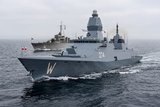
The new Colombian OPV will take around two and a half years to build. (Photo: COTECMAR)
The Colombian shipbuilding corporation COTECMAR has started the construction of an OPV as the first platform as part of an order for three new ships.


Construction of the OPV, which began on 31 March, will take ‘around two and a half years,’ and ‘is the first [OPV] manufactured based on a local design by a Latin American country,’ according to COTECMAR.
The OPV has a length of 93m-long and will carry a ‘rapid reaction boat and a helicopter,’ the shipbuilder added.
The vessel will be used for maritime security, patrol, and maritime interdiction, among other operations, the Colombian Navy told Shephard.
The new OPV still needs to be assigned a name, the Navy added, but it will have the new ‘Colombia OPV-class’ designation.
The
Our news & analysis is now part of Defence Insight®
A Basic-level or higher Defence Insight subscription is now required to view this content.




More from Naval Warfare
-
![All eyes on Royal Navy’s Type 93 market engagement as industry prepares bids]()
All eyes on Royal Navy’s Type 93 market engagement as industry prepares bids
Responses are due by 29 October as the Royal Navy tests the market, with BAE Systems’ Herne and MSubs’ Excalibur setting up a contest where payloads may decide the winner.
-
![US Navy’s MQ-25 Stingray approaches carrier-integration tests]()
US Navy’s MQ-25 Stingray approaches carrier-integration tests
Boeing has outlined its upcoming precision-landing and carrier-airspace trials as MQ-25 manufacturing shifts towards Illinois, with initial Lot 1 deliveries expected in 2029.
-
![From Poland to the Pacific: can Miecznik become a blueprint for other navies?]()
From Poland to the Pacific: can Miecznik become a blueprint for other navies?
Babcock is taking its Polish industrial partnership approach to Denmark and New Zealand as navies seek sovereign shipbuilding skills alongside ships.