Canada’s multi-purpose vessel fleet progresses with new equipment contract
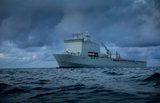
The multi-purpose vessels for the Canadian Coast Guard will run a variety of mission types, including icebreaking. (Image: Seaspan Shipyards)
The 16-strong fleet will replace three current classes of vessel.


The Canadian Coast Guard’s National Shipbuilding Strategy to replace three current classes with 16 multi-purpose vessels by the mid-2040s has progressed with the contracting of Vestdavit to provide davits for six vessels at the Seaspan Shipyards in Vancouver.
Vestdavit will initially provide six FF-15000 davit systems that will act as boat-cranes for the first six of the new multi-purpose vessels, with an option for the remaining ten as need arises.
Vestdavit recently won a contract with Seaspan to supply RHIB davits for the Polar Icebreaker, which is to begin construction soon for the Canadian Coast Guard.
Magnus Oding, general manager
Our news & analysis is now part of Defence Insight®
A Basic-level or higher Defence Insight subscription is now required to view this content.


More from Naval Warfare
-
![Naval Group’s Barracuda bid could deepen Franco-Greek naval alignment]()
Naval Group’s Barracuda bid could deepen Franco-Greek naval alignment
As the Hellenic Navy looks to replace its ageing submarines with a next-generation fleet, other likely contenders for the programme include TKMS, Saab, Fincantieri, Navantia and Hanwha Ocean.
-
![US Navy budget seeks 34 ships on yesterday’s industrial base]()
US Navy budget seeks 34 ships on yesterday’s industrial base
The 2027 budget demands 34 new vessels, but ageing yards and backlogs raise questions about whether American shipbuilding can deliver.
-
![Australia is ramping up its uncrewed surface fleet as Sea Archer lines up for key requirement]()
Australia is ramping up its uncrewed surface fleet as Sea Archer lines up for key requirement
As advances in uncrewed technology increasingly shape Australia’s maritime future, Shephard spoke with the country’s head of navy capability and a Leidos Australia executive about the operational advantages behind the shift.
-
![What does Saab’s operations shake-up mean for its new ‘Naval’ chapter?]()
What does Saab’s operations shake-up mean for its new ‘Naval’ chapter?
Saab’s merger of its Kockums and Naval Combat Systems divisions into a single business area called Naval, effective 1 April 2026, aims to enhance efficiency, innovation and competitive positioning in the naval sector.