Can the West keep up with China’s “XXL” uncrewed submarines?
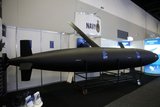
The Royal Navy unveiled Excalibur in May 2025 at HMNB Davenport. (Photo: Crown Copyright)
The UK, the US and Australia have all been working on “extra-large” uncrewed underwater vehicles, but China’s reported development of a significantly larger capability demonstrates the country’s rapid advancement in underwater warfare.


As global militaries continue to focus on advancing autonomous and uncrewed capabilities to tackle emerging threats, multiple navies made significant progress in 2025 on their uncrewed submarine developments – and notably on extra-large uncrewed underwater vehicles (XLUUVs).
While conventional submarines remain crucial to contemporary fleets, autonomous, crewless platforms aim to work alongside traditional vessels to enhance the functions of the force; in much the same way as uncrewed capabilities are increasingly becoming crucial to air and land exercises.
With uses ranging from intelligence, surveillance and reconnaissance (ISR), anti-submarine warfare (ASW), mine-laying and mine countermeasures and payload delivery, XLUUVs can operate in challenging or dangerous
Already have an account? Log in
Want to keep reading this article?

More from Naval Warfare
-
![Australia signs US$2.8 billion ship deal with Austal but puts pressure on company to deliver]()
Australia signs US$2.8 billion ship deal with Austal but puts pressure on company to deliver
The A$4 billion Landing Craft Heavy contract for Austal follows on from a A$1 billion deal in December for Landing Craft Medium ships, but the Australian government has made it clear that a contract for Mogami frigates is reliant on the success of these two contracts.
-
![US Navy to deploy UAVs with standard munitions in long-range strikes]()
US Navy to deploy UAVs with standard munitions in long-range strikes
As part of the Runway Independent Maritime & Expeditionary Strike programme, the US Navy is pursuing drones capable of delivering palletised rounds or 1,000lb-class munitions.
-
![Turkey targets Italian market with strategic partnership on USVs and hybrid platforms]()
Turkey targets Italian market with strategic partnership on USVs and hybrid platforms
Havelsan, VN Maritime and Piloda Defence will collaborate to develop and integrate a range of maritime solutions with a view to secure a first procurement contract in Italy in the first half of this year.
-
![Could Asia and the Middle East offer growth opportunities for Italy’s Fincantieri?]()
Could Asia and the Middle East offer growth opportunities for Italy’s Fincantieri?
Export campaigns for Fincantieri’s submarines and frigates are central to the company’s ambitions as billions of dollars in unawarded contracts come into focus.