Can Portugal solve NATO’s uncrewed systems development challenge?
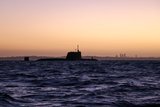
A Greyshark AUV (right) swims with dolphins in Portuguese waters during a recent REPMUS. (Photo: NATO)
NATO has spent more than a decade building one of the world’s most sophisticated maritime uncrewed experimentation ecosystems, but still lacks a way to translate this testing into alliance-wide operational capability. Portugal now believes it has the answer.


During the past 15 years, Robotic Experimentation and Prototyping with Maritime Unmanned Systems (REPMUS) and Dynamic Messenger exercises have progressively positioned Portugal as NATO’s primary hub for maritime uncrewed systems (MUS) experimentation.
Its initial scope was modest, covering annual R&D and T&E demonstrations at Tróia, exploiting a geography that offers sheltered coastal waters for early-stage systems on the one hand and open Atlantic conditions for more advanced testing on the other.
Since then, the exercise and its ambitions have expanded significantly. Participation grew between 2018 and 2023 from five countries to more than 25. REPMUS has also progressively shifted from technology
Our news & analysis is now part of Defence Insight®
A Basic-level or higher Defence Insight subscription is now required to view this content.



More from Country-focused updates
-
![British Army's open plan draws diverse offerings for Land Rover replacement]()
British Army's open plan draws diverse offerings for Land Rover replacement
The UK Ministry of Defence has avoided being prescriptive in its search to replace the British Army’s Land Rover, meaning vehicle types being offered range from Land Rover Defender Wolf II and Humvee to the hybrid series Fering Pioneer. What does this mean for the procurement process?
-
![V-22 Osprey safety upgrade moves towards wider fleet installation under $35.5 million deal]()
V-22 Osprey safety upgrade moves towards wider fleet installation under $35.5 million deal
Bell Boeing will supply 73 additional ODSSHI kits as NAVAIR prepares to introduce predictive drive-system monitoring across US and Japanese V-22 fleets.
-
![AFA 2026: US Air Force examines uncrewed cargo aircraft for contested logistics]()
AFA 2026: US Air Force examines uncrewed cargo aircraft for contested logistics
The US Air Force is evaluating demonstrators for uncrewed cargo missions as it considers logistics requirements across the Pacific and other contested environments.
-
![DVD 2026: British Army’s Ajax back in the hands of users as part of a gradual return]()
DVD 2026: British Army’s Ajax back in the hands of users as part of a gradual return
The introduction of Ajax vehicles into British Army service was stopped after operator health issues were reported during an exercise, but manufacturer General Dynamics Land Systems UK believes work over the past 10 months has dealt with the problems.