CAMM integration to boost Type 45 missile arsenal by half
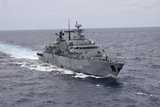
RN Type 45 destroyer HMS Daring in the South China Sea. (Photo: MoD/ Crown Copyright.)
The UK MoD is upgrading the capabilities of its Daring-class Type 45 destroyers with the addition of MBDA’s Common Anti-Air Modular Missile (CAMM), known as Sea Ceptor.


Missile overhauls costing £500 million ($692 million), first detailed in March in the MoD Defence Command Paper, will see each UK RN Type 45 destroyer increase its missile capacity by 50% to 72 missiles with a new 24-missile CAMM silo.
MBDA has been awarded an 11-year contract for the integration of CAMM, and a separate 10-year agreement with Eurosam will refresh the capabilities of the in-service Aster-30 missile.
MBDA’s work will see CAMM paired with an upgraded Aster (also known as Sea Viper) C2 system for the first time.
The UK plans to overhaul the first Type 45 destroyer by Q3 2026. The entire
Our news & analysis is now part of Defence Insight®
A Basic-level or higher Defence Insight subscription is now required to view this content.

You may also like
More from Naval Warfare
-
![US Navy’s $275 billion BBGN plan hinges on shipyard transformation]()
US Navy’s $275 billion BBGN plan hinges on shipyard transformation
The US Navy’s planned nuclear-powered warship carries a US$275 billion price tag, but the greater story lies in the industrial overhaul needed to build it, from AI-enabled design to digital twins and modular construction.
-
![Industry sees opportunity in Australia’s shift to networked undersea warfare]()
Industry sees opportunity in Australia’s shift to networked undersea warfare
Australia’s new defence innovation strategy indicates a shift from platform-centric to network-centric undersea warfare, with Ocius and Anduril Industries pointing to fast-growing opportunities for local industry.
-
![Asia-Pacific emerges as the largest export market for US-made USVs]()
Asia-Pacific emerges as the largest export market for US-made USVs
Asian customers have placed one of the largest known international purchases of US-built uncrewed surface vessels, highlighting accelerating regional demand for autonomous maritime capabilities and distributed naval operations.
-
![RTX confirms US Marine Corps and US Navy acquire Hadalus UUV]()
RTX confirms US Marine Corps and US Navy acquire Hadalus UUV
RTX told Shephard that the Hadalus UUV has been procured by the US Marine Corps and the Office of Naval Research for operational experimentation as the company prepares additional demonstrations with the US Navy, NATO and AUKUS partners.
-
![The UK joins the movement towards joint procurement]()
The UK joins the movement towards joint procurement
The UK will spend an estimated US$3.89 billion over the next decade in joint naval programmes, a lot of which will be in cooperation with Norway.