Birdon selected for new Australian medium littoral craft with plans for the heavy element to follow
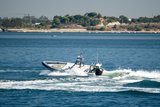
Birdon has kept quiet about its LMV-M bid over the past two years refusing to engage with the media or disclose the details of its design and industrial arrangements. (Photo: Birdon)
The Royal Australian Navy is developing a new amphibious capability that will allow it to forward position Australian Army units from shore-to-shore or ship-to-shore at long distances. This will enhance the Australian Defence Force’s (ADF’s) rapid deployment capability and ability to operate in a contested environment.


The Australian Department of Defence (DoD) has selected Birdon Group as preferred designer for Project Land 8710 Phase 1: Littoral Manoeuvre Vessel – Medium (LMV-M), which will see the construction of 18 new 60m-long ships that will replace the Army’s existing 15 Landing Craft Medium 8 (LCM 8) vessels operated by the Army’s 35th Water Transport Squadron. Deliveries will begin from 2026.
The announcement, made on 23 November, has brought the project forward by several months as a decision was not expected until 2024 following the completion of an 18-month analysis phase. It was not clear if Land 8170 phase 1 had been part
Our news & analysis is now part of Defence Insight®
A Basic-level or higher Defence Insight subscription is now required to view this content.

More from Naval Warfare
-
![From REPMUS to procurement: the four capabilities NATO navies want from USVs]()
From REPMUS to procurement: the four capabilities NATO navies want from USVs
Syos Aerospace will channel its first outside capital into research, production and overseas reach as navies seek jam-resistant, integrated uncrewed fleets.
-
![Canada targets 2027 frigate trials for CU179 Peregrine uncrewed helicopter]()
Canada targets 2027 frigate trials for CU179 Peregrine uncrewed helicopter
The Royal Canadian Navy’s CU179 Peregrine will undergo Halifax-class frigate trials in 2027 ahead of initial operational capability in 2028, while River-class destroyer integration arrangements remain undefined.
-
![AUKUS heavyweight torpedo test raises questions over future armed UUV requirements]()
AUKUS heavyweight torpedo test raises questions over future armed UUV requirements
A heavyweight torpedo firing from the Royal Navy’s uncrewed submarine XV Excalibur suggests a shift beyond surveillance, with allied navies eyeing strike roles for large autonomous undersea vessels.