BAE to upgrade cruiser USS Vicksburg


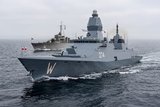
BAE Systems has received a contract worth $42.9 million from the US Navy to upgrade the USS Vicksburg (CG 69), a Ticonderoga-class guided missile cruiser, the company announced on 16 March.
BAE Systems will start upgrading the ship in April at the company’s Norfolk, Virginia shipyard under the special selected restricted availability (SSRA) contract. Work is expected to be completed by September 2017.
The company will carry out miscellaneous repairs aboard the 567-foot-long ship, including the replacement of critical aluminium structures.
If all options are exercised, the value of the contract could reach $45.9 million.
Dave Thomas, VP and general manager of BAE Systems Norfolk Ship Repair, said: ‘The Vicksburg is our second SSRA under the long-term cruiser mod programme. Our team recently completed similar work on-board the Gettysburg, which is now ready for the next phase of modernisation next year and continued service in the fleet afterwards.
‘This SSRA contract provides important work for our shipyard team, particularly for our skilled employees and their work with aluminium structures aboard navy ships.’


More from Naval Warfare
-
![Canada assesses security equipment changes for Polar Icebreaker Imnaryuaq]()
Canada assesses security equipment changes for Polar Icebreaker Imnaryuaq
The Canadian Department of National Defence is evaluating communications and reconnaissance changes for CCGS Imnaryuaq’s expanded maritime security role, while retaining its 2032 acceptance target.
-
![US Navy’s MQ-25 Stingray approaches carrier-integration tests]()
US Navy’s MQ-25 Stingray approaches carrier-integration tests
Boeing has outlined its upcoming precision-landing and carrier-airspace trials as MQ-25 manufacturing shifts towards Illinois, with initial Lot 1 deliveries expected in 2029.
-
![From Poland to the Pacific: can Miecznik become a blueprint for other navies?]()
From Poland to the Pacific: can Miecznik become a blueprint for other navies?
Babcock is taking its Polish industrial partnership approach to Denmark and New Zealand as navies seek sovereign shipbuilding skills alongside ships.
-
![Unsettled waters in the North: can navies still trust their Arctic acoustic maps?]()
Unsettled waters in the North: can navies still trust their Arctic acoustic maps?
The changing Arctic environment is creating new challenges for submarine detection, driving demand for distributed sensors, uncrewed underwater vehicles and real-time acoustic modelling.