BAE Systems to provide more Network Tactical Common Data Links to the US Navy
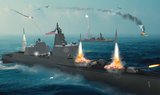
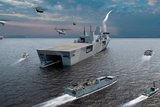
NTCDL systems will provide the system and architecture for communications from naval vessels. (Image: BAE Systems)
Network Tactical Common Data Link (NTCDL), a multi-platform modular and scalable solution for all US Navy (USN) Common Data Link (CDL) requirements, has been designed to increase link capacity and embrace waveform evolution.


BAE Systems will deliver NTCDLs to the USN under a US$85 million contract. Building on contracts to install systems on USN aircraft carriers, they will now also be installed on new Constellation-class frigates.
The award modifies an existing BAE Systems contract to extend the programme’s total period of performance by three years.
NTCDL will enable a real-time exchange of voice, data, imagery and full-motion video from a variety of air, surface, subsurface and man-portable sources.
Related Articles
BAE awarded naval data-sharing contract
US Navy contracts BAE Systems for data link production
NTCDL supports multiple, simultaneous, networked operations using currently fielded CDL equipment, as well as next-generation manned and unmanned platforms.
It has been designed to enable operators to simultaneously transmit and receive real-time intelligence, surveillance and reconnaissance data from multiple sources, as well as exchange command and control information across separate or independent networks.
In August 2022, the USN awarded BAE Systems a contract worth $42.6 million to produce seven NTCDL systems which followed a contract awarded in 2016 worth up to $84.7 million.
Related Programmes in Defence Insight
Constellation Class - FFG(X) (11-20)
Constellation Class - FFG (1-2) [USN]
Related Equipment in Defence Insight



More from Naval Warfare
-
![US Navy’s $275 billion BBGN plan hinges on shipyard transformation]()
US Navy’s $275 billion BBGN plan hinges on shipyard transformation
The US Navy’s planned nuclear-powered warship carries a US$275 billion price tag, but the greater story lies in the industrial overhaul needed to build it, from AI-enabled design to digital twins and modular construction.
-
![Europe’s naval contractors benefit from growing refit and upgrade demand]()
Europe’s naval contractors benefit from growing refit and upgrade demand
Rheinmetall’s order to modernise the German Navy frigate Bayern points to a wider European shift towards extending warship service life as new-build programmes face delay.
-
![The UK joins the movement towards joint procurement]()
The UK joins the movement towards joint procurement
The UK will spend an estimated US$3.89 billion over the next decade in joint naval programmes, a lot of which will be in cooperation with Norway.