BAE Systems to modernise destroyer USS Ross
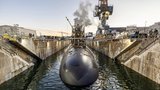
The Arleigh Burke-class destroyer USS Ross will be overhauled and modernised by BAE Systems. (Photo: USN)
BAE Systems has been awarded a $107.7 million contract by the US Navy to modernise the Arleigh Burke-class destroyer, USS Ross.


Under an extended dry-docking selected restricted availability contract, BAE Systems will perform modernisation work on the USS Ross at its Norfolk shipyard in Virginia.
The company will dry-dock Ross to carry out maintenance on the underwater hull, repair its main propulsion system, preserve internal ballast and fuel tanks and work on crew berthing and dining compartments.
Modernisation work is scheduled to be completed in April 2024, allowing the ship to serve for ten further years.
Ross recently completely a seven-year operational period forward deployed to Rota, Spain.
The last of the Flight I Arleigh Burke-class ships, USS Ross, was laid down in April 1995, launched in March 1996 and commissioned in June 1997. Shephard Defence Insight cites an out-of-service date of 2036 for Flight I.
Related Equipment in Defence Insight


More from Naval Warfare
-
![Chinese maritime militia puts naval surveillance to the test]()
Chinese maritime militia puts naval surveillance to the test
With record deployments in the South China Sea and a newly reported sighting east of Taiwan, China’s maritime militia is putting greater pressure on regional surveillance. How can navies establish what these vessels are doing quickly and reliably enough to respond?
-
![Kongsberg Maritime and Thales UK team on Arctic Hunter Type 92 proposal]()
Kongsberg Maritime and Thales UK team on Arctic Hunter Type 92 proposal
The Norwegian company says a commercial hull, proven sonar and a British yard could deliver uncrewed submarine hunters by the end of the decade, but the Royal Navy has not yet set a requirement or timeline.
-
![US Navy weighs “Super Intelligence” role in designing a quieter SSN(X) attack submarine]()
US Navy weighs “Super Intelligence” role in designing a quieter SSN(X) attack submarine
NAVSEA is exploring AI-assisted design for a larger, stealthier submarine with increased weapons capacity and uncrewed-system integration, with lead-boat procurement envisaged from 2040.
-
![Navies need cheaper ways to defeat drones, but can they sustain merchant protection?]()
Navies need cheaper ways to defeat drones, but can they sustain merchant protection?
New interceptors and launchers could help navies preserve missile stocks during prolonged escort operations. Yet lower engagement costs will only improve merchant protection if the weapons are available where ships need defending.