BAE Systems: Australian Hunters are ‘progressing very well’
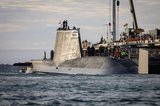
The Hunter class will be an extremely capable warship, but few major Australian procurement projects start smoothly. (RAN)
Flurries of criticism about Australia’s future frigates have been growing in intensity, but BAE Systems has come out of its corner to counter the narrative.


Australia’s ongoing programme to build nine Hunter-class frigates has routinely come in for criticism in Australian media reports. Some of the blame surely lies at the door of the Department of Defence because of a recent short-sighted policy deflecting media enquiries.
Consequently, conjecture about the viability of the Hunter-class programme has been rife. This included a leaked 36-page Engineering Team Assessment prepared by the DoD last November.
At the same time, accusations from the then shadow minister for defence claimed Project Sea 5000 was already running A$15 billion [$10.8 billion] over budget and four years late.
Another knife in
Our news & analysis is now part of Defence Insight®
A Basic-level or higher Defence Insight subscription is now required to view this content.



More from Naval Warfare
-
![Five years on: where could opportunities emerge next for AUKUS Pillar II?]()
Five years on: where could opportunities emerge next for AUKUS Pillar II?
Payload commonality, combat systems and electronic warfare are emerging as likely priorities as the trilateral partnership balances building submarines with sharing industrial ecosystems.
-
![From the Baltic to the Gulf: where USV procurement is heading next]()
From the Baltic to the Gulf: where USV procurement is heading next
Saildrone’s new Copenhagen base is one sign of a larger shift, as navies globally turn to uncrewed vessels for surveillance and mine clearance.
-
![Israeli Navy looks to expand as war reshapes future force requirements]()
Israeli Navy looks to expand as war reshapes future force requirements
Israel’s navy is preparing for a larger and more technically diverse role, but its ambitions could be impacted by supply chain restrictions, accelerating demand for domestic naval production as well as autonomous maritime capabilities.