DSEI 2023: Has the Royal Navy cut back its support vessel fleet too far?
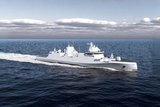
The new Fleet Solid Support (FSS) ships for the Royal Fleet Auxiliary will provide essential dry stores replenishment to the RN and enable long-duration deployments globally. (Photo: BMT)
This second in Shephard’s three-part series examining the state of the UK RN analyses the fleet of support ships. These important vessels sustain naval forces at sea for long durations and at vast distances, but cuts to the Royal Fleet Auxiliary’s fleet have left crucial ships retired or sold, prompting concerns for future missions.


In the early 2000s the complaint in the Royal Navy was that it had mortgaged its future to get the two Queen Elizabeth-class aircraft carriers into service and as a result had suffered significant cuts to its surface combatant fleet.
This is being rectified with new frigate and destroyer programmes on the cards. Nonetheless, with the focus on replenishing high-end warship numbers, the price now being paid is that cuts have fallen on the RN’s support ship capability instead.
Over recent years, to provide the MoD with savings the RN’s support ship capability, largely provided by the Royal Fleet
Our news & analysis is now part of Defence Insight®
A Basic-level or higher Defence Insight subscription is now required to view this content.

More from Naval Warfare
-
![US Navy $76.6bn award provides stability for submarine production]()
US Navy $76.6bn award provides stability for submarine production
The US Department of War’s US$76.6 billion Columbia-and Virginia-class submarine contract gives industry demand certainty as Washington seeks to rebuild its shipbuilding base.
-
![Dreadnought Phase 4 opens £2.5 billion supply chain opportunity]()
Dreadnought Phase 4 opens £2.5 billion supply chain opportunity
The UK government’s £8.4 billion Dreadnought Phase 4 investment sets aside £2.5 billion for the wider submarine supply chain, opening new work beyond BAE Systems’ prime contract.
-
![A400M trial demonstrates airborne deployment of uncrewed surface vessel]()
A400M trial demonstrates airborne deployment of uncrewed surface vessel
Kraken Technology Group’s A400M airdrop of a K3 Scout uncrewed surface vessel points to a new way for navies to insert USVs into contested waters, bypassing ports and motherships.