To make this website work, we log user data. By using Shephard's online services, you agree to our Privacy Policy, including cookie policy.

×
Open menu Search

Explainer: Australian submarines have a sinking feeling

16th January 2020 - 20:00 GMT | by Gordon Arthur in Christchurch

RSS

It is unsurprising that an official warning has sounded over spiralling problems relating to the ‘high-risk’ Project Sea 1000, a Royal Australian Navy (RAN) programme to procure 12 ‘regionally superior’ submarines to replace six in-service Collins-class boats.

On 14 January, whilst national media were fixated on bushfires engulfing swathes of Australia and many people were still on their summer holidays, the Australian National Audit Office (ANAO) with little fanfare released a report entitled ‘Future Submarine Program – Transition to Design’.

It is the third ANAO report to focus on or cover the Sea 1000 programme. While the language and tone are measured, the delays and budget excesses accruing come as a stark warning for a country that has had more than its fair share of procurement difficulties.

One bombshell in the ANAO report is that the governmental Naval Shipbuilding Advisory Board directed the Department of Defence in 2018 to ‘consider alternatives to the current plan’ because of negotiation difficulties with Naval Group.

Simultaneously, they were to consider upgrading the Collins class as this ‘would allow [time] to develop a new acquisition strategy for the Future Submarine if necessary’. So serious were these concerns that the advisory board even asked ‘whether program risks outweighed the benefits of proceeding’.

At Pacific 2019 in Sydney last October, the RAN and Naval Group held a briefing in which there was a distinct sense of optimism and no mention of brooding trouble. However, as can be seen, the ANAO report hints at divergent problems behind the scenes.

Naval Group is designing the Attack class.

The Attack class is an Australian-customised version of the French Barracuda class. Thus, the ANAO report comments: ‘The decision not to acquire a military‐off‐the-shelf submarine platform, and instead engage a “strategic partner” to design and deliver the submarines with significant Australian industry input, has increased the risk of this acquisition.’

On price alone, a blowout is already occurring, even though the commencement of construction is still distant. Even before the estimated cost started escalating, this was going to be Australia’s most expensive defence procurement. In 2016, the Department of Defence said that the Future Submarines would cost A$50 billion ($38.5 billion). By November 2019, that figure had ballooned to A$80 billion.

As of 30 September 2019, a total of A$456.6 million had been disbursed to Naval Group and Naval Group Australia, and A$148.7 million to Lockheed Martin Australia as combat system integrator.

Quite apart from cost, the Sea 1000 timeline is looking increasingly depressing for the RAN too.

Naval Group was selected as international partner on 26 April 2016, and their commercial relationship kicked off with the Future Submarine Program Design and Mobilisation Contract signed on 30 September the same year. However, it then took more than 28 months for the Strategic Partnering Agreement to be signed on 11 February 2019, nearly 16 months later than expected.

Twelve negotiating sessions occurred over a period of 100 days, leading to the head of the programme reporting: ‘Negotiation of the Strategic Partnering Agreement with Naval Group has been challenging, and has taken longer than anticipated.’

However, after all the trouble putting it in place, the ANAO suggested: ‘While there is evidence of active contract management by Defence, it is too early to assess the success of the Strategic Partnering Agreement or the partnership between Defence and Naval Group.’

The Royal Australian Navy will obtain 12 new submarines.

The preliminary design review was originally set for March 2020, and the critical design review for June 2022. Yet, last year, Naval Group requested that the design completion date be moved back 15 months to September 2023. Australia endorsed this but allowed a delay of just nine months.

The report notes: ‘The program is currently experiencing a nine-month delay in the design phase against Defence’s pre-design contract estimates, and two major contracted milestones were extended. As a result, Defence cannot demonstrate that its expenditure of $396 million on design of the Future Submarine has been fully effective in achieving the program’s two major design milestones to date.’

These two key mandated design milestones that are delayed are the Concept Studies Review and Systems Requirements Review.

With the timeline under severe pressure, a submarine capability gap is looming. Indeed, if no upgrade is implemented, the Collins class is due to be withdrawn by 2036.

The Naval Shipbuilding Advisory Board therefore recommended ‘acceleration of the planning for the Collins modernisation and life-of-type extension to provide additional capability to account for delays in Future Submarine is warranted’.

The ANAO report notes: ‘Defence has identified that a delay in the Future Submarine Program of more than three years will create a gap in Navy’s submarine capability. Defence’s planning for a life-of-type extension for its Collins-class submarines, to manage the risk of a capability gap, remains at an early stage.’

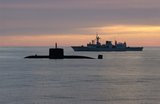
Australia has six Collins-class submarines.

Project Sea 1450 is a Collins-class life extension programme, but it is yet to proceed through first gate approval. Regardless, the military believes the first submarine can undergo it when it enters a docking cycle in 2026.

ANAO further said: ‘To introduce efficiencies and manage risk in Navy’s transition from the Collins class to the Attack class, Defence is considering installing subsystems and components in the upgraded Collins class that will be common to the Attack class. Defence expects that this approach will allow it to test these subsystems and enable Defence personnel to become familiar with these subsystems before transitioning to the Attack class.’

There are numerous anecdotes suggesting strained relations between the Australian and French partners. ANAO tactfully alluded to this: ‘The relationship between Defence and Naval Group is at a relatively early stage and the parties are addressing a wide range of complex issues, including the challenge of establishing an effective partnership and a mutual understanding on specific matters.’

ANAO said elsewhere: ‘Defence has highlighted for attention differences in the commercial and engineering approaches of Defence and Naval Group, which it considers to have impacted on progress to date.’ In fact, these differing approaches were categorised as ‘extreme’ risks.

The Future Submarine programme has attracted criticism since it was instigated.

The report is certainly not all doom and gloom. Indeed, it commends the Department of Defence for some things: ‘The work of the competitive evaluation process is competent, diligent, expert and consistent. It is sufficiently disciplined to withstand scrutiny and is well documented. The competitive evaluation process to identify the right international partner will be successful in finding the right answer.’

In the report, the Department of Defence was given opportunity to respond. It insisted: ‘Importantly, the commencement of construction activities in Australia, and the delivery of the Future Submarines has not been delayed.’

Already it has been decided that fabrication of complex hull parts for the first boat will occur in France rather than in Australia to reduce risk. Will more work have to be diverted to France?

Operational test and evaluation of the first hull was originally slated for 2031, with introduction to service in 2033. These deadlines will be unattainable.

Apart from upgrading the Collins class, the RAN never really had a backup plan. However, are planners beginning to look more earnestly at an alternative solution, something possessing less risk, if the Naval Group partnership eventually sinks?

Gordon Arthur

Author

Gordon Arthur


Gordon Arthur was the Asia Pacific editor for Shephard Media. Born in Scotland and educated …

Read full bio

Share to

Linkedin