RAN opens new training centre


The AWD Alliance’s Air Warfare Destroyer (AWD) project has achieved a new milestone, with the Royal Australian Navy (RAN) opening its Navy Training Systems Centre at Randwick Barracks, it was announced on 7 April.
Training for the RAN’s Landing Helicopter Dock (LHD) and AWD capabilities will be carried out at the purpose-built facility.
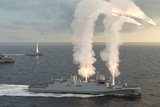
The first AWD, HMAS Hobart, is now being prepared for sea trials. A number of key combat systems on the vessel have now been activated including the Vertical Launch System, the Australian Tactical Interface, the Aegis Software Operating Environment and the SPY1D-V phased array radar, along with various navigation and platform systems. In the coming weeks, Hobart will complete the activation of its main engines, in preparation for sea trials later this year.
The Hobart-class multi-purpose warships will provide cross-spectrum capability to the navy, including diplomatic missions, escort duties, area air defence and joint maritime operations.
The AWD Alliance team consists of ASC, Raytheon Australia and the Department of Defence. Raytheon Australia is responsible for designing, integrating, testing and activating the Hobart class combat system for all the three destroyers, and delivering land-based associated support facilities.
Lloyd Beckett, general manager, AWD Alliance, said: ‘The activation of the combat system is an exciting time for a first-of-class ship such as Hobart. It is a further demonstration of the demanding work that we are executing on this project, and proof of our ability to manage the risks associated with highly complex integration activities. I am immensely proud of what the AWD Alliance is achieving together as one team.’
According to the alliance, Brisbane is 75% complete as it prepares for launch in the coming year; while Sydney is 49% complete, with the final block delivery to occur in May 2016.

You may also like
More from Naval Warfare
-
![How France’s SNLE 3G programme is reshaping the naval nuclear industrial base]()
How France’s SNLE 3G programme is reshaping the naval nuclear industrial base
Extending far beyond a four-submarine replacement programme, France’s ballistic missile submarine effort is a decades-long industrial effort designed to preserve the country’s ability to build and sustain nuclear-powered strategic platforms.
-
![China’s mineral processing dominance exposes naval supply chain vulnerabilities]()
China’s mineral processing dominance exposes naval supply chain vulnerabilities
Competition for critical minerals, and China’s dominance of their processing, is emerging as a decisive factor in future naval procurement programmes.
-
![Suppliers await next step in Australia’s mine warfare transition]()
Suppliers await next step in Australia’s mine warfare transition
Australia’s mine countermeasure capability remains in flux as the Huon-class nears retirement, but accelerated investment in autonomous systems is opening a path for industry.
-
![Can the US Navy ask Indo-Pacific allies to do more while training with them less?]()
Can the US Navy ask Indo-Pacific allies to do more while training with them less?
As the Iran War draws US ships and marine corps units away from the Indo-Pacific, curtailed exercises and a temporary carrier gap are exposing tensions between Washington’s demand for more self-reliant allies and the joint training needed to realise that ambition.
-
![How could Rheinmetall’s GMF 140 fit with ongoing programmes in North America?]()
How could Rheinmetall’s GMF 140 fit with ongoing programmes in North America?
With Canada committed to its River-class replacement and the USN pursuing a lower-cost frigate, Rheinmetall will need to demonstrate where the GMF 140 can fill a capability gap in the North American fleet.