Australia to launch Indian Ocean military exercises from Colombo


Australia will launch a seven-nation Indian Ocean military exercise the week of 18 March 2019, starting in Sri Lanka where China has invested in strategic ports and loaned huge amounts to build other infrastructure, Canberra’s envoy said 15 March.
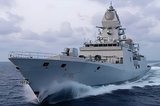
Some 1,000 Australian security personnel in four naval ships and a military aircraft will participate in the biggest joint exercise yet with their Sri Lankan counterparts, Canberra’s top envoy in Colombo, Jon Philp, said. ‘Sri Lanka and Australia are increasingly like-minded on maritime security and Indian Ocean issues,’ Philp said adding that the two countries will improve cooperation and familiarity with each other’s defence forces.
Australian forces will move to neighbouring India on March 26 and thereafter travel to Malaysia, Thailand, Vietnam, Indonesia and Singapore before returning to Darwin after two and a half months. The joint exercise comes as concerns grow over Beijing’s influence on Sri Lanka’s economy and Chinese control over two key ports.
Unable to service a $1.4 billion Chinese loan to build a deep-sea port in the island’s south, Colombo leased the facility to a Beijing company for $1.12 billion in 2017. A state-owned Chinese company also runs Sri Lanka’s biggest container terminal in Colombo.
Neighbouring India as well as Western nations have expressed concern about China’s foothold on vital locations in Sri Lanka which is strategically placed along the most important East-West sea route. An ambitious plan, seeking to link Asia, Europe and Africa with a network of ports, highways and railways, has seen China disperse tens of billions of dollars in loans to developing nations, sparking fears of a ‘debt trap’.
The largest single lender to Sri Lanka, China has secured contracts to build roads, railways and ports.
Philp played down China’s growing presence in the Indian Ocean region saying Canberra considered Beijing a ‘extremely important’ partner. ‘We welcome China’s role in the region and look forward to working with China,’ he said.
Growing fears of political influence from foreign states, particularly China, saw Australia pass a raft of new laws last year to curb potential meddling.



More from Naval Warfare
-
![Competitive P17B tender marks a shift in Indian Navy frigate procurement]()
Competitive P17B tender marks a shift in Indian Navy frigate procurement
The Indian Navy's P17B programme is expected to combine greater weapons capacity with a competitive domestic construction model, although key systems could remain dependent on international supply chains.
-
![How France’s SNLE 3G programme is reshaping the naval nuclear industrial base]()
How France’s SNLE 3G programme is reshaping the naval nuclear industrial base
Extending far beyond a four-submarine replacement programme, France’s ballistic missile submarine effort is a decades-long industrial initiative designed to preserve the country’s ability to build and sustain nuclear-powered strategic platforms.
-
![Quantum Systems enters maritime domain with Baltic-focused USV and UUV]()
Quantum Systems enters maritime domain with Baltic-focused USV and UUV
Quantum Systems has launched into the maritime domain with Seavex and Subvex, aiming to close a Baltic Sea ISR gap opened by infrastructure sabotage.
-
![Suppliers await next step in Australia’s mine warfare transition]()
Suppliers await next step in Australia’s mine warfare transition
Australia’s mine countermeasure capability remains in flux as the Huon-class nears retirement, but accelerated investment in autonomous systems is opening a path for industry.
-
![Can the US Navy ask Indo-Pacific allies to do more while training with them less?]()
Can the US Navy ask Indo-Pacific allies to do more while training with them less?
As the Iran War draws US ships and marine corps units away from the Indo-Pacific, curtailed exercises and a temporary carrier gap are exposing tensions between Washington’s demand for more self-reliant allies and the joint training needed to realise that ambition.