Australia has no looming submarine capability gap, at least according to the RAN
The USN currently has 19 nuclear-powered Virginia-class SSN vessels in service, with USS North Dakota pictured here. (USN)
Will the recent change of government bring about a much-needed admission from Australia’s navy that a capability gap will occur in its submarine fleet?


The cancellation of the 12-submarine Attack-class programme with Naval Group has cost the Australian taxpayer €555 million ($583 million), Canberra revealed on 11 June.
The Australian government and its former client negotiated the above fee, which was described as ‘fair and equitable’. Australia’s newly installed government added, ‘Now that the matter is resolved, we can move forward with the relationship with France.’
However, the total cost of the failed submarine programme is more like A$3.4 billion ($2.35 billion), considering the money already spent. Prime Minister Anthony Albanese described it as ‘an extraordinary waste from a government that was always
Our news & analysis is now part of Defence Insight®
A Basic-level or higher Defence Insight subscription is now required to view this content.


More from Naval Warfare
-
![A400M trial demonstrates airborne deployment of uncrewed surface vessel]()
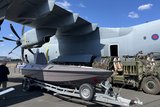
A400M trial demonstrates airborne deployment of uncrewed surface vessel
Kraken Technology Group’s A400M airdrop of a K3 Scout uncrewed surface vessel points to a new way for navies to insert USVs into contested waters, bypassing ports and motherships.
-
![From the seas to the web: the changing shape of UK defence in Southeast Asia]()
From the seas to the web: the changing shape of UK defence in Southeast Asia
As his final engagement before leaving his post as the head of the British defence staff for Southeast Asia and defence adviser to Singapore, Brigadier Eddie Maskell-Pedersen spoke with Shephard about maritime security, cyber cooperation and long-term partnerships.
-
![Naval primes dive into an underwater acquisition gold rush]()
Naval primes dive into an underwater acquisition gold rush
A cluster of acquisitions by Fincantieri, Thales, Lockheed Martin and Rheinmetall points to a race to secure underwater warfare, autonomy and sensing capability.
-
![Baltic naval priorities shift towards mine warfare and versatile platforms]()
Baltic naval priorities shift towards mine warfare and versatile platforms
Baltic states are investing in mine warfare, uncrewed systems and multirole platforms as major warship purchases remain scarce, industry sources indicate.