AUKUS nations sign naval nuclear propulsion information-sharing agreement
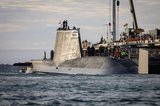
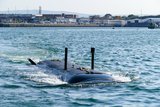
The RN’s Astute-class submarine is a contender for the basis of Australia’s future SSN. (Photo: UK MoD/ Crown Copyright)
The Australian Department of Defence said a new agreement only allows for sharing naval nuclear propulsion information and not the transfer of equipment.


AUKUS partners Australia, the UK and the US have signed an ‘Exchange of Naval Nuclear Propulsion Information Agreement’, progressing Canberra’s plans to build conventionally armed, nuclear-powered submarines.
The agreement will progress consultations, allowing the UK and US to exchange sensitive and classified nuclear propulsion information with Australia.
It will also provide a mechanism for Australian personnel to access training from US and UK counterparts to safely build, operate, and support nuclear-powered boats.
Minister for Defence Peter Dutton said: ‘This Agreement will support Australia in completing the 18 months of intensive and comprehensive examination of the requirements underpinning the delivery of nuclear-powered submarines,’
The Australian Parliament’s Joint Standing Committee on Treaties will consider the agreement and subject to domestic processes in the UK and US.
The announcement of the AUKUS agreement on 15 September shocked the world and came with the cancellation of Australia’s previous plans to buy 12 diesel-electric submarines from France’s Naval Group.
During an 18-month concept phase, the AUKUS trio will hammer out the future Australian nuclear submarine requirements.
Related Programmes in Defence Insight

You may also like

More from Naval Warfare
-
![Five years on: where could opportunities emerge next for AUKUS Pillar II?]()
Five years on: where could opportunities emerge next for AUKUS Pillar II?
Payload commonality, combat systems and electronic warfare are emerging as likely priorities as the trilateral partnership balances building submarines with sharing industrial ecosystems.
-
![Singapore expands maritime presence with future-ready Sentinel OPV]()
Singapore expands maritime presence with future-ready Sentinel OPV
Singapore is building space for uncrewed systems and future technologies into its new Sentinel-class OPVs, reflecting a wider move towards adaptable vessels capable of maintaining persistent maritime presence.
-
![From the Baltic to the Gulf: where USV procurement is heading next]()
From the Baltic to the Gulf: where USV procurement is heading next
Saildrone’s new Copenhagen base is one sign of a larger shift, as navies globally turn to uncrewed vessels for surveillance and mine clearance.
-
![Israeli Navy looks to expand as war reshapes future force requirements]()
Israeli Navy looks to expand as war reshapes future force requirements
Israel’s navy is preparing for a larger and more technically diverse role, but its ambitions could be impacted by supply chain restrictions, accelerating demand for domestic naval production as well as autonomous maritime capabilities.
-
![Quantum sensing gathers pace as navies eye undersea advantage]()
Quantum sensing gathers pace as navies eye undersea advantage
As AI dominates defence conversations, industry increasingly points to quantum sensing as the technology set to change submarine and uncrewed underwater vehicle operations.
-
![Competitive P17B tender marks a shift in Indian Navy frigate procurement]()
Competitive P17B tender marks a shift in Indian Navy frigate procurement
The Indian Navy's P17B programme is expected to combine greater weapons capacity with a competitive domestic construction model, although key systems could remain dependent on international supply chains.