£30 million UK-New Zealand deal sends new uncrewed vehicles to Ukraine
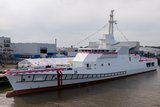
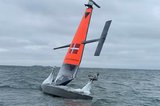
The rapidly-developed SYOS SM300 uncrewed vehicle. (Photo: SYOS Aerospace)
Sam Vye, the CEO of SYOS Aerospace, which supplied the vehicles, explained the rapid development and deployment of assets in the uncrewed world.


The UK and New Zealand have signed a deal to increase their joint support of Ukraine, including providing £30 million (US$40 million) of uncrewed vehicles to be sent to the front.
Prime ministers Sir Keir Starmer and Christopher Luxom met at Downing Street to deepen the countries’ military connections.
That increased co-operation included an extension of Operation Interflex (the UK-led campaign to train Ukrainian fighters), the joining of the Royal New Zealand Navy with the UK Carrier Group on deployment to the Indo-Pacific region, and the new uncrewed vehicle deal. No details of the numbers of vehicles or their make-up
Our news & analysis is now part of Defence Insight®
A Basic-level or higher Defence Insight subscription is now required to view this content.

More from Naval Warfare
-
![Argentina’s submarine and frigate acquisitions resurface with $3.5bn funding plan]()
Argentina’s submarine and frigate acquisitions resurface with $3.5bn funding plan
Buenos Aires set out foreign loans worth $3.5 billion in its draft 2027 budget, opening a contest in which Naval Group and TKMS could lead the field.
-
![Industrial teams prepare roadmap for Indonesia aircraft carrier transformation]()
Industrial teams prepare roadmap for Indonesia aircraft carrier transformation
Fincantieri and PT PAL have agreed on a framework to modernise the former Giuseppe Garibaldi, with drones, communications and broader Italian–Indonesian industrial ties involved.
-
![Denmark’s air defence frigate requirement draws growing European competition]()
Denmark’s air defence frigate requirement draws growing European competition
With no formal competition under way, industrial partnerships, production capacity and air defence capability could all shape the programme as Denmark considers how to replace its three Iver Huitfeldt-class frigates.
-
![Singapore expands maritime presence with future-ready Sentinel OPV]()
Singapore expands maritime presence with future-ready Sentinel OPV
Singapore is building space for uncrewed systems and future technologies into its new Sentinel-class OPVs, reflecting a wider move towards adaptable vessels capable of maintaining persistent maritime presence.