Production starts on US Marine Corps C-UAS programme
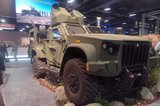
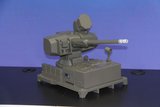
Kongsberg RS6 RWS for MADIS RWSs mounted on the JLTVs. (Photo: Kongsberg)
The production of the MADIS RWS has moved from Kongsberg, Norway to Kongsberg Protech Systems USA in Johnstown (Pennsylvania).


Kongsberg confirmed on 23 May that production of the Marine Air Defense Integrated System (MADIS) Remote Weapon Station (RWS) has moved from its facilities in Norway to Kongsberg Protech Systems USA in Pennsylvania, with assembly and testing of the inaugural system having been completed at Johnstown in March.
Apart from this US-made solution, a total of five prototype and test assets were produced for the USMC in Norway.
The Kongsberg RS6 RWS for MADIS RWS includes the XM914E1 30mmx113mm percussion-primed cannon with a co-axial M240C (7.62mm) machine gun, an integration kit for the Stinger Air-To-Air Launcher (ATAL) and provisions for future C-UAS defeat systems.
The USMC awarded Kongsberg an IDIQ Other Transaction Authority production contract in September 2021. It has a ceiling of $94 million and includes a series of LRIP systems, full-rate production units, spares and training.
MADIS is part of the USMC’s plan to upgrade their two active Low Altitude Air Defense (LAAD) battalions.
Related Equipment in Defence Insight


More from Land Warfare
-
![US Army pursues commercial routes to modernise cannon and mortar manufacturing]()
US Army pursues commercial routes to modernise cannon and mortar manufacturing
Watervliet Arsenal’s digital manufacturing push opens opportunities for industry as the US Army modernises cannon production and its wider Organic Industrial Base.
-
![AUSA 2026: Nammo advances 155mm ramjet artillery technology for extended-range fire]()
AUSA 2026: Nammo advances 155mm ramjet artillery technology for extended-range fire
Nammo is developing new artillery ammunition designed to extend firing ranges, combining ramjet propulsion research with conventional, base-bleed and rocket-assisted projectile designs.
-
![AUSA 2026: XM30 competitors keep their cards close as US Army decision approaches]()
AUSA 2026: XM30 competitors keep their cards close as US Army decision approaches
The US Army’s XM30 programme is an ambitious multi-billion-dollar effort to replace Bradley infantry fighting vehicles. American Rheinmetall and General Dynamics Land Systems are fighting for the contract.
-
![AUSA 2026: AM General boss confirms 300-plus JLTV A2s delivered as export orders approach]()
AUSA 2026: AM General boss confirms 300-plus JLTV A2s delivered as export orders approach
The Joint Light Tactical Vehicle programme for the US Marine Corps appears to be making progress, with AM General increasing production of its version while Oshkosh Defense has secured long-lead materials in anticipation of becoming a second supplier.
-
![AUSA 2026: Bale Defence adds CUAS role to RTV6 platform]()
AUSA 2026: Bale Defence adds CUAS role to RTV6 platform
An elevated remote weapon station, radar sensor and 12.7mm machine gun provide the Australian vehicle with a potential mobile counter-drone capability.