


Canada accelerates uncrewed aerial system procurement for NATO and Arctic forces
Canada plans to acquire at least 120 uncrewed aerial systems through two competitions with combined funding ceilings of C$32 million.


US Army soldiers fire M240L machine guns during a weapon qualifying exercise in Iraq in October 2018. (Photo: US Army/Spc Javion Siders)
FN America has won a new $49.97 million deal to provide M240L 7.62mm machine guns and titanium receivers for the US Army, the DoD announced on 31 January.
The FN Herstal subsidiary was selected ahead of an unnamed rival bidder.
Work locations and funding will be determined with each order from US Army Contracting Command, with an estimated completion date of 27 January 2027.
The gas-operated M240L weighs 10.1kg (less than other M240 variants) and it has a barrel length of 1,230mm. Its maximum range is 3,725m and its rate of fire is 550-650 rounds per minute.
The use of titanium on the M240L help to reduce combat load for infantry ‘while allowing easier handling and movement of the weapon’, according to the US Army Program Executive Office Soldier.
FN America is an established supplier for the US Army. For example, it obtained a $92.1 million deal from the US Army in June 2021 for an undisclosed number of FN MAG M240 series 7.62mm machine gun variants and spare receivers.


Canada plans to acquire at least 120 uncrewed aerial systems through two competitions with combined funding ceilings of C$32 million.
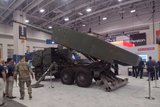
New counter-drone technologies, autonomous launchers and manufacturing modernisation initiatives highlighted emerging opportunities for defence suppliers, while the UK advanced a major military vehicle procurement programme.

Non-US companies are increasingly looking to establish subsidiary and partnerships to access the potential billions of dollars of vehicle and land systems contracts and there has already been some success.

Pearson Engineering has provided equipment and engineering expertise to the Armed Forces of Ukraine since the beginning of the full-scale Russian invasion in 2022. The British company is now working to deepen engagement with the Ukrainian defence industry, expanding its support for the country’s population and laying the foundations for future technological innovation.
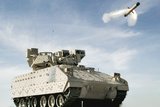
Rather than developing entirely new weapons, defence companies are looking to build on existing weapons and systems to deliver greater capability, control costs and accelerate fielding.

With a production rate of more than 10 million vehicles annually, the US commercial car and vehicle manufacturing base is second only to China. Defence companies are looking at how the vehicles, technology and manufacturing capability can support programmes.

Connect with us on socials


