


Clearer military requirements could unlock UGV market growth
Western armies continue to test uncrewed ground vehicles, but wider procurement will depend on turning ambitions for autonomy into defined operational roles and funded requirements.


The UK’s Lead Armoured Battle Group (LABG) is participating in a NATO exercise hosted by Poland, the UK Ministry of Defence announced on 19 October. The five-week, two-part exercise started in September and will run until the end of October.
Around 800 UK troops and over 130 British Army vehicles, including Challenger 2 main battle tanks and Warrior infantry armoured fighting vehicles, are participating in Exercise Dragon.
The first phase - a UK-only exercise - was conducted at the Drawsko Pomorski Training Area. The second phase, also involving Canada, the US, Germany and Poland, is being conducted at the Orzysz Training area.
The exercise allows the armed forces from participating NATO nations to practice and test multinational, joint combined arms manoeuvres at the divisional level. The UK’s contribution predominately involves the army. Up to 10,000 troops from the five participating nations are involved in the exercise in total.
Michael Fallon, UK Defence Secretary, said that the exercise will help preparations for NATO’s new rapid reaction taskforce, for which the UK will provide troops every year into the next decade.

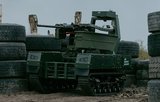
Western armies continue to test uncrewed ground vehicles, but wider procurement will depend on turning ambitions for autonomy into defined operational roles and funded requirements.

Framework contracts and leasing options aim to shorten acquisition timelines, while manufacturing partnerships could help suppliers scale production to meet allied demand.
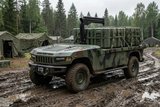
The US is pursuing multiple UGV programmes, from commercial robotic platforms to new autonomy technologies. The combination of these efforts could prove key to turning ambition into operational capability.

NATO is looking to artificial intelligence to provide integration between different C2 systems to create a common operational picture, potentially offering a faster route to interoperability than the slow-moving processes of NATO standards committees.

The large-scale exercise in Latvia was the culmination of three experimentation initiatives to see how platforms, weapons and systems could fit into the alliance’s Eastern Flank Deterrence Initiative. As well as forces, it brought together companies and equipment.

Canada plans to acquire at least 120 uncrewed aerial systems through two competitions with combined funding ceilings of C$32 million.

Connect with us on socials


