The US Government approves the sale of long-range artillery and rocket systems to Latvia
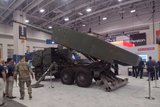
Latvia is set to become the next operator of HIMARS (Photo: US Army)
Under the Foreign Military Sale (FMS) approved by the Defense Security Cooperation Agency (DSCA) Latvia could receive M142 High Mobility Artillery Rocket Systems (HIMARS) and M30A2 Guided Multiple Launch Rocket System (GMLRS).


The sale of six HIMARS and 12 GMLRS to Latvia has been approved by the DSCA along with 10 M57 Army Tactical Missile System (ATACMS) Pods and other systems in a deal worth up to US$220 million.
The order also includes 12 GMLRS unitary high explosive pods with insensitive munitions propulsion system, reduced range practice rocket pods, intercom systems to support the HIMARS Launcher and munitions and spares.
In July 2022, Latvia announced it was going to request the purchase of HIMARS which would provide a substantial boost to the country’s capabilities out to almost 600km and ATACMs which have a range of 300km.
Geopolitically the systems are key for Latvia as it has Russian-ally Belarus on one border and Russia, currently at war with Ukraine, on another.
The announcement was made on 23 October and on the same day the DSCA approved announced a $500 million sale for 150 AGM-88G Advanced Anti-Radiation Guided Missiles-Extended Range to Finland and $100 million for 36 AIM-120C-8 Advanced Medium-Range Air-to-Air Missiles to Lithuania.
In a quite different part of Europe to these orders, the DSCA also approved the sale to the UK of 3000 AGM-179A Joint Air-to-Ground Missiles (JAGM) and ancillary equipment for an estimated cost of $957.4 million.


More from Land Warfare
-
![Canada accelerates uncrewed aerial system procurement for NATO and Arctic forces]()
Canada accelerates uncrewed aerial system procurement for NATO and Arctic forces
Canada plans to acquire at least 120 uncrewed aerial systems through two competitions with combined funding ceilings of C$32 million.
-
![Front-line support: how UK industry is helping tackle Ukraine’s landmine challenges]()
Front-line support: how UK industry is helping tackle Ukraine’s landmine challenges
Pearson Engineering has provided equipment and engineering expertise to the Armed Forces of Ukraine since the beginning of the full-scale Russian invasion in 2022. The British company is now working to deepen engagement with the Ukrainian defence industry, expanding its support for the country’s population and laying the foundations for future technological innovation.
-
![AUSA 2026: industry looks to make commercial platforms a military reality]()
AUSA 2026: industry looks to make commercial platforms a military reality
With a production rate of more than 10 million vehicles annually, the US commercial car and vehicle manufacturing base is second only to China. Defence companies are looking at how the vehicles, technology and manufacturing capability can support programmes.