World Defense Show 2026: Rostec unveils new infantry fighting vehicle
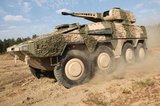
The latest infantry fighting vehicle from Rosoboronexport draws on experience from the war in Ukraine, and is designed to be more lethal and more survivable than its predecessors.
The SMASH AD promises precise, swift, safe and simple hard-kill elimination of drone threats.
Following Dutch military tests of the Smash AD solution recently, the Netherlands has moved to procure the system primarily for C-UAS purposes.
Smash is a fire control solution for small arms that ensures each round finds its target by incorporating precision-missile targeting algorithms and advanced electro-optical processing capabilities into standard assault rifles.
It works automatically, but not autonomously, allowing the operator to quickly and effectively neutralise their target.
The system can be integrated into any type of assault rifle and combined with other C-UAS systems to provide an effective multi-layer defence solution suitable for the modern battlefield.
Smash AD is designed to provide kinetic elimination of small low-flying drones through its laser rangefinder, precision targeting technologies and day and night vision capabilities.
It can receive and display target information with an external sensor or detection system and has a range of up to 250m in day mode.
The Smash family of small-arms fire control solutions is in use with a range of militaries, last year the Indian Armed Forces moved to procure the Smash 2000 plus system.
The latest infantry fighting vehicle from Rosoboronexport draws on experience from the war in Ukraine, and is designed to be more lethal and more survivable than its predecessors.
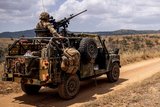
The Rhino 4x4 protected vehicle is being manufactured for an undisclosed country, likely to be Singapore, while its Agil counter-UAS C2 system is in low-rate production.
Saudi Arabia’s investment in its land forces, notably in the area of air defence as recently as 30 January, is a sign of the challenges the Gulf State faces, particularly the threat from Houthi rebels in Yemen.
Hybrid-electric drive technology may address the growing energy demands of land warfare in future.
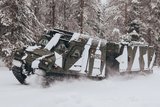
The Common Armoured Vehicle System is continuing to rack up orders as the British Army looks likely to become an operator of the vehicle, while Italy and Ireland are also contenders.
As the US Department of Defense looks to counter the growing threat of uncrewed aerial systems to improve homeland security, the DroneHunter acquisition could point to future commercial innovation.