Switzerland to begin testing air defence bids
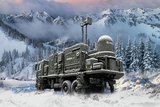
Two downselected bids being offered for Switzerland’s long-range air defence system requirement are due to undergo testing by armasuisse in collaboration with the Swiss army in coming months, which will assess the radar detection performance of each of the systems.
These will take place in August and September in Gubel in Menzingen, and will assess the Patriot system developed by Raytheon and the SAMP/Tdeveloped by the Eurosam consortium, testing the detection capability of the offerings.
They will both have two weeks respectively to demonstrate the performance of the radars in each, which will then be verified by the government.
This acquisition programme is dubbed DSA – or ground-to-air defence – and falls under Switzerland’s Air2030 effort.
It aims to acquire a new long-range air defence system, and will fill the gap left after the Bloodhound guided missile system was decommissioned in 2000.
Raytheon and Eurosam submitted their respective proposals in March 2019 in response to requirements issued by the Swiss government in March 2018.
Related Equipment in Defence Insight




More from Land Warfare
-
![Team Grenadier aims for success with the British Army’s LMV programme]()
Team Grenadier aims for success with the British Army’s LMV programme
Team Grenadier has unveiled the latest variant of its Grenadier 4x4, which it hopes will win the Light Mobility Vehicle segment of the army’s Land Mobility Programme.
-
![Dominating the spectrum: ASELSAN’s EW capabilities take center stage at MSPO 2026]()
Dominating the spectrum: ASELSAN’s EW capabilities take center stage at MSPO 2026
ASELSAN is showcasing its advanced electronic warfare (EW) capabilities at MSPO 2026, highlighting technologies designed to detect, analyse, disrupt and deceive threats across increasingly contested electromagnetic environments.
-
![“Creating a decision advantage”: how C-UAS is evolving to reduce the operator burden]()
“Creating a decision advantage”: how C-UAS is evolving to reduce the operator burden
In Conversation… Speaking to Shephard’s Gerrard Cowan, Dr Brian Shand, Director – Advanced Concepts & Technology at L3Harris, explains how, as operators face growing numbers of low-cost drones, C-UAS providers must focus on reducing operator workload, transforming fragmented sensor data into effective decision-making.