Sweden and UK double down on NLAW procurement
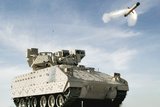
With the donation of more than 5,000 NLAWs to Ukraine, the UK now looks to bolster production. (Photo: UK MoD/Crown Copyright)
Following the success of NLAW in the defence of Ukraine, the UK and Sweden have signed an agreement for increased procurement of the system.


The UK MoD and the Swedish defence procurement agency FMV have signed an agreement allowing the former to use the latter’s existing agreement with Saab for the production of Next-generation Light Anti-tank Weapons (NLAWs).
The UK has donated a significant number of NLAW missiles to Ukraine while Sweden has focused on sending the AT4 Pansarskott 86 antitank gun.
In January, as Russian troops were positioned in Belarus, UK Defence Secretary Ben Wallace announced that the UK had taken the decision to supply Ukraine with antitank weapons.
By March, Wallace confirmed the delivery of 3,615 NLAWs produced by Thales UK; then, while addressing MPs
Our news & analysis is now part of Defence Insight®
A Basic-level or higher Defence Insight subscription is now required to view this content.



More from Land Warfare
-
![AUSA 2026: companies adapt munitions and missiles for greater effect at lower costs]()
AUSA 2026: companies adapt munitions and missiles for greater effect at lower costs
Rather than developing entirely new weapons, defence companies are looking to build on existing weapons and systems to deliver greater capability, control costs and accelerate fielding.
-
![AUSA 2026: CUAS market expands as suppliers target new threats and operational requirements]()
AUSA 2026: CUAS market expands as suppliers target new threats and operational requirements
New developments from MARSS, MyDefence, Mountain Horse Solutions and Rafael suggest that future counter-drone protection will increasingly depend on combining advanced detection, rapid interception and integrated defensive networks.
-
![US Army seeks CAML-Lite autonomous launcher prototypes for 2027 live-fire trials]()
US Army seeks CAML-Lite autonomous launcher prototypes for 2027 live-fire trials
The optionally crewed, C-130-transportable platforms would combine modular offensive and defensive fires with autonomous resupply, with demonstrations planned for Talisman Sabre 2027.