Sensis next generation small scale counter-fire radar successfully completes second live fire demonstration
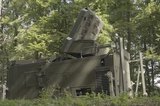
Sensis Corporation has successfully completed the second round of testing for its highly compact, vehicle-deployable small arms counter-fire radar. During complex live fire scenarios at US Army Camp Atterbury, the radar’s overall performance was demonstrated by accurately detecting multiple weapons’ bullets fired from random positions and ranges in real time. The radar provided the same performance in tracking sonic and sub-sonic rounds, providing a distinct advantage over current sensor technologies that cannot detect sub-sonic rounds or whose performance is limited by enemy fire in noisy urban environments or adverse weather conditions.
Sensis’ compact radar and user display provides 360-degree detection of multiple projectiles (>150 simultaneous tracks) that penetrate the protective Radio Frequency (RF) bubble formed around the vehicle by the radar. The high resolution, low power consumption radar accurately determines the incoming vector of hostile fire along with its flight path. The radar’s flexible design allows deployment on multiple platforms.
“Current counter-fire sensor technologies are limited when faced with sub-sonic rounds and in inclement weather,” said Ken Kaminski, vice president of Sensis Advanced Development. “The Sensis RF technology has proven to be easy to use, highly deployable and offers better performance at detecting multiple and various calibers of small arms fire in difficult environments.”
Source: Sensis




More from Land Warfare
-
![Europe’s eastern flank moves on air defence radars with wider efforts also underway]()
Europe’s eastern flank moves on air defence radars with wider efforts also underway
Air defence radars have become more important assets in the past year with incursions in NATO countries on Europe’s eastern flank highlighting the need.
-
![Australia’s SM-2 land trial could reshape ADF medium-range air defence plans]()
Australia’s SM-2 land trial could reshape ADF medium-range air defence plans
The first ground launch of the SM-2 could offer Canberra a path to expand its missile defence capability by adapting systems already fielded across the ADF.
-
![New teams form to compete for British Army Land Rover replacement]()
New teams form to compete for British Army Land Rover replacement
The UK’s Land Mobility Programme Light Mobility Vehicle requirement is designed to replace the British Army’s ageing fleet of Land Rovers with a vehicle with a Gross Vehicular Mass of less than 3,500kg. It could be for as many as 6,000 vehicles.