Russian Baltic Fleet receives new Smerch MLRS


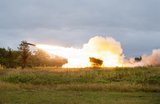
The Russian Ministry of Defence reported on 30 March that the Baltic Fleet had received new Smerch multiple launch rocket systems (MLRS).
Multiple variants of Smerch have been used by the Russian military since 1987 and the MLRS has also been delivered to allies of Russia such as Belarus, Syria and Venezuela.
Smerch is a long-Range 300mm MLRS with a range of 20km to 90km. New armaments are being delivered to the Baltic Fleet as part of a wider modernisation and rearmament programme. This modification will increase the maximum range to 120km.
The Baltic Fleet is deployed in the Kaliningrad Region bordering NATO member states Lithuania and Poland.
Related Equipment in Defence Insight


More from Land Warfare
-
![Front-line support: how UK industry is helping tackle Ukraine’s landmine challenges]()
Front-line support: how UK industry is helping tackle Ukraine’s landmine challenges
Pearson Engineering has provided equipment and engineering expertise to the Armed Forces of Ukraine since the beginning of the full-scale Russian invasion in 2022. The British company is now working to deepen engagement with the Ukrainian defence industry, expanding its support for the country’s population and laying the foundations for future technological innovation.
-
![AUSA 2026: industry looks to make commercial platforms a military reality]()
AUSA 2026: industry looks to make commercial platforms a military reality
With a production rate of more than 10 million vehicles annually, the US commercial car and vehicle manufacturing base is second only to China. Defence companies are looking at how the vehicles, technology and manufacturing capability can support programmes.
-
![With changing patterns in Middle Eastern procurement, is Europe missing out?]()
With changing patterns in Middle Eastern procurement, is Europe missing out?
Traditional suppliers are struggling to meet the Middle East’s armoured vehicle modernisation needs, creating opportunities for South Korean manufacturers and regional defence industries.
-
![AUSA 2026: CUAS market expands as suppliers target new threats and operational requirements]()
AUSA 2026: CUAS market expands as suppliers target new threats and operational requirements
New developments from MARSS, MyDefence, Mountain Horse Solutions and Rafael suggest that future counter-drone protection will increasingly depend on combining advanced detection, rapid interception and integrated defensive networks.