Raytheon to continue Excalibur supply


Raytheon has received a $31.8 million contract from the US Army to manufacture and supply 464 Excalibur Ib extended-range precision projectiles, the company announced on 16 February.
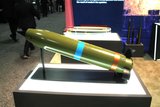
Excalibur is a precision-guided, extended-range projectile that uses GPS guidance to provide accurate, first-round effects against targets at long ranges. It has been in full-rate production since mid-2014.
Duane Gooden, vice president, land warfare systems, Raytheon, said: ‘There is growing demand in the international market for Excalibur’s accurate, first-round effects capability. Raytheon has also funded an internal development programme aimed at bringing Excalibur’s unprecedented capabilities to the maritime domain.’
Raytheon is developing Excalibur N5, a 127mm variant for the US Navy. The N5 uses Excalibur Ib’s guidance and navigation unit and 99% of the Ib system’s software.



More from Land Warfare
-
![AUSA 2026: XM30 competitors keep their cards close as US Army decision approaches]()
AUSA 2026: XM30 competitors keep their cards close as US Army decision approaches
The US Army’s XM30 programme is an ambitious multi-billion-dollar effort to replace Bradley infantry fighting vehicles. American Rheinmetall and General Dynamics Land Systems are fighting for the contract.
-
![AUSA 2026: AM General boss confirms 300-plus JLTV A2s delivered as export orders approach]()
AUSA 2026: AM General boss confirms 300-plus JLTV A2s delivered as export orders approach
The Joint Light Tactical Vehicle programme for the US Marine Corps appears to be making progress, with AM General increasing production of its version while Oshkosh Defense has secured long-lead materials in anticipation of becoming a second supplier.
-
![AUSA 2026: Bale Defence adds CUAS role to RTV6 platform]()
AUSA 2026: Bale Defence adds CUAS role to RTV6 platform
An elevated remote weapon station, radar sensor and 12.7mm machine gun provide the Australian vehicle with a potential mobile counter-drone capability.