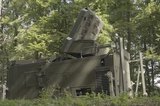
Raytheon to continue LRPF work
Raytheon has secured a $116.4 million contract from the US Army to begin work on the technological maturation and risk reduction phase of the Long-Range Precision Fires (LRPF) programme, the company announced on 12 June.
LRPF aims to replace the Army Tactical Missile System with a new, longer-range surface-to-surface weapon that can defeat fixed land targets out to 499km.
Called DeepStrike, Raytheon’s LRPF will fire two missiles from a single weapons pod, boost range over current systems by more than 40 percent, and will offer the army the capability to implement future upgrades to increase its versatility for future battlefield requirements.
Work under the phase will include testing missile components to ensure the design is ready for engineering and manufacturing development and live-fire demonstrations by the end of 2019.
Thomas Bussing, VP of Raytheon’s advanced missile systems product line, said: ‘Raytheon can develop, test and field this new capability and deliver it to the army ahead of current expectations to replace aging weapons. LRPF gives soldiers on the battlefield overmatch capability against adversaries.’





More from Land Warfare
-
![Europe’s eastern flank moves on air defence radars with wider efforts also underway]()
Europe’s eastern flank moves on air defence radars with wider efforts also underway
Air defence radars have become more important assets in the past year with incursions in NATO countries on Europe’s eastern flank highlighting the need.
-
![Australia’s SM-2 land trial could reshape ADF medium-range air defence plans]()
Australia’s SM-2 land trial could reshape ADF medium-range air defence plans
The first ground launch of the SM-2 could offer Canberra a path to expand its missile defence capability by adapting systems already fielded across the ADF.
-
![New teams form to compete for British Army Land Rover replacement]()
New teams form to compete for British Army Land Rover replacement
The UK’s Land Mobility Programme Light Mobility Vehicle requirement is designed to replace the British Army’s ageing fleet of Land Rovers with a vehicle with a Gross Vehicular Mass of less than 3,500kg. It could be for as many as 6,000 vehicles.