Raytheon laser takes out aerial target in groundbreaking trial with British Army
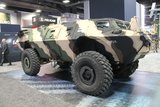
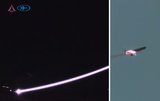
The laser was fired from a British Army Mastiff. (Photo: Raytheon)
The trial is the latest stage of the Ministry of Defence’s Land Laser Directed Energy Weapon (LDEW) demonstrator programme.


Raytheon has fired a laser against a quadcopter UAS from a British Army vehicle using soldiers trained on the weapon’s targeting and tracking technologies, an exercise described by the company as a first.
The test involved Raytheon’s High-Energy Laser Weapon System (HELWS) as part of the UK Ministry of Defence’s Land Laser Directed Energy Weapon (LDEW) demonstrator programme.
The test took place at a military range in Wales using a British Army Wolfhound armoured personnel carrier.
Related Articles
German Armed Forces successfully concludes laser weapon demonstrator trials
UK DragonFire laser weapon completes successful test
The system operates by directing a beam of energy toward its target, using advanced sensors and tracking systems to maintain lock-on and accuracy in real time.
According to Raytheon “it has proved effective in real-world conditions, validating its potential as a game-changing technology in modern warfare”.
Earlier this year, Raytheon’s HELWS was the first laser weapon integrated and fired from a land vehicle in the UK. That happened as part of a joint programme between Raytheon UK and Team Hersa, the joint LDEW enterprise between the Defence and Science Laboratory and Defence Equipment and Support.
Matt Cork, head of Team Hersa, said: “By integrating advanced directed energy technologies onto armoured platforms, we’re not only proving the feasibility of these game-changing systems but also accelerating their path to operational readiness.”
Other companies involved include Fraser Nash, NP Aerospace, LumOptica, Blighter Surveillance Systems and Cambridge Pixel. The work is occurring under a £16.8 million (US$21.5 million) contract awarded by Team Hersa.
The next steps in the project include producing learning from experience for the whole project, and using that to inform future LDEW requirements for the army.


More from Land Warfare
-
![AUSA 2026: Textron shows upgraded Commando Select as it seeks exports beyond Ukraine]()
AUSA 2026: Textron shows upgraded Commando Select as it seeks exports beyond Ukraine
The latest Commando Select configuration incorporates improvements to its powerpack and suspension, with the first of 65 vehicles destined for Ukraine expected to be delivered in early 2027.
-
![Active protection systems: from optional upgrade to operational requirement]()
Active protection systems: from optional upgrade to operational requirement
As battlefield threats multiply, active protection systems are becoming increasingly important for armoured vehicle survivability – but cost, integration challenges and evolving drone threats will determine how widely they can be deployed.
-
![AUSA 2026: can converting established vehicle platforms offer route into emerging UGV market?]()
AUSA 2026: can converting established vehicle platforms offer route into emerging UGV market?
Defence manufacturers are showcasing uncrewed versions of established military and commercial vehicles at AUSA 2026 as the US Army’s Project Sustainment draws interest.
-
![Singapore confirms fully automated SIGMA SPH as new precision-strike system emerges]()
Singapore confirms fully automated SIGMA SPH as new precision-strike system emerges
Singapore has confirmed plans to introduce a fully automated howitzer alongside an emerging precision-strike capability whose weapon type and deployment status have not been disclosed.