Python snakes into action against the Taliban
The Royal Engineers have fired their latest weapon in their battle against the Taliban for the first time – an exploding hose which punches safe passage through suspected IED belts.
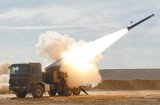
The Python rocket is a trailer-mounted, rocket-propelled mine-clearing system pulled behind the Trojan armoured engineer tank. The Python system fires a snake of high explosives.
The detonation, across a suspected IED field in a dry river bed – wadi – north of Patrol Base Wahid, shook the ground either side of the detonation, and created a huge cloud several hundred metres high.
“It takes your breath away. You feel the vehicle rock, and in awe of what has just happened. You see the flash, hear the bang and then feel the shock wave,” said Staff Sergeant Mark Eastley, 35, from Devon, from 30 Armoured Engineer Squadron.
“This explosion, although loud, was an act to clear safe passage for British and Afghan soldiers through the belts of roadside bombs that kill civilians and soldiers”
“We are clearing this belt of death so that civilians and their families can begin to live without fear of being blown to pieces by a cowardly and dishonorable enemy that is happy to kill indiscriminately,” said Lt Col Matt Bazeley, CO of 28 Eng Regiment, who oversaw the use of Python.
All families in the area were contacted to ensure that no civilians came near the blast.
“It’s not an aggressive tool. It is a tool to save military and civilian lives. It makes the routes safe,” said Lt Jim Viney, 24, from 26 Eng Reg, who is commander of the Trojan troop.
As the weapon fired, a series of rockets lifted the hose out of its barrel, shooting it over the Trojan tank, into the air and laid it over a long strip of ground. Seconds later the hose exploded, creating a flash, followed by a thump and a cloud.
“The kit provides a breaching capability. Its primary employment to date will be clearance of known IED areas to provide a safe route,” said Staff Sgt Eastley.
The 150 Royal Tank Regiment and Royal Engineer soldiers on the convoy reacted positively to the successful use of Python.
“It’s going to be very effective,” said LCpl Simon Whitemore, one of a ‘Barma’ team – men who walk in front of vehicles to check the ground for possible IEDS.
“It will save us getting out and combing the ground for IEDS all the time, so there is less risk to our lives,” said LCpl Whitemore, from 1 Royal Tank Regiment.
1 Royal Tank Regiment’s 24 Viking Armoured Personal Carries are providing force protection for the Engineers convoy, which consists of anti-mine and bridge building equipment.
In addition, The Royal Engineers used Trojan – which is fitted with a large plough on the front – to clear safe passage through a suspected IED belt to the north west of Showal, the Taliban’s ‘seat’ of governance. It was the first time that the plough had been used on active operation in Afghanistan.
“I was confident the kit worked but it was going through the back of my mind: are we going to hit an IED?” said Sapper Gwynfor Hughes, 24, from Prestatyn, North Wales, who was the Trojan’s driver.
Source: Ministry of Defence





More from Land Warfare
-
![US Army to procure next-gen remote sensing capabilities to boost battlefield mobility]()
US Army to procure next-gen remote sensing capabilities to boost battlefield mobility
The US Army Materiel Command is seeking solutions that can automatically detect and classify natural or man-made obstacles preventing the manoeuvrability of land vehicles.
-
![Next-generation Franco-German tank under threat as France opts for interim solution]()
Next-generation Franco-German tank under threat as France opts for interim solution
The French Army’s upgraded Leclerc main battle tank is expected to begin retiring before the end of the 2030s and the government is looking to adopt an interim solution ahead of a next-generation tank.
-
![US Marine Corps provides US$900 million for prototypes as vehicle refresh motors on]()
US Marine Corps provides US$900 million for prototypes as vehicle refresh motors on
General Dynamics Land Systems and Textron Systems are competing to replace the US Marine Corps’ fleet of light armoured vehicles. The companies have been awarded contracts to provide prototypes of three different vehicle variants.
-
![Canada’s Inkas to complete development of improved M1 MRAP in May]()
Canada’s Inkas to complete development of improved M1 MRAP in May
PT Sentra Surya Ekajaya’s P2 Tiger, the SCATA Mk1 and the Inkas M1 armoured personnel carriers are each built on the proven Celeris base, but all are still awaiting firm orders.