Norway shortlists two candidates for future MBT solution
Norway is looking for new MBTs to replace its decades-old Leopard 2 A4 fleet and increase the operational capability of the army as part of a broader restructuring effort


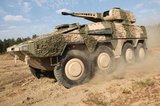
The Norwegian MoD has identified the South Korean K2 Black Panther and the German Leopard 2 A7 (pictured) as potential solutions to meet a requirement to improve the army’s MBT fleet.
The number of tanks, cost framework and project timescale are still to be defined but a Norwegian MoD spokesperson was able to tell Shephard that that the new MBTs will replace Leopard 2 A4 tanks that are more than 30 years old.
These MBTs have shortcomings ‘when it comes to fulfilling today’s operational requirements’, the spokesperson noted, emphasising that ‘the main goal of purchasing new tanks is to increase
Our news & analysis is now part of Defence Insight®
A Basic-level or higher Defence Insight subscription is now required to view this content.

More from Land Warfare
-
![Trans-European iMUGS2 uncrewed systems programme set for three-day exercise in 2028]()
Trans-European iMUGS2 uncrewed systems programme set for three-day exercise in 2028
The next stage of the Integrated Modular Unmanned Ground System (iMUGS) programme, dubbed iMUGS2, was launched in November 2025. Three major demonstrations are planned before the end of 2028.
-
![How joint ventures are expanding Rheinmetall's munitions portfolio (video)]()
How joint ventures are expanding Rheinmetall's munitions portfolio (video)
Roman Köhne, CEO of Rheinmetall's Weapon and Ammunition Division, discusses the company's announcements at Eurosatory 2026, including developments in defence technology, precision systems, industrial partnerships and future capability programmes.
-
![Push strengthens for a second JLTV supplier]()
Push strengthens for a second JLTV supplier
A move, launched in May, could lead to a second supplier for the US Marines Corps’ Joint Light Tactical Vehicle requirement. Meanwhile, Wisconsin elected representatives have been pushing for necessary funding to be included in the FY27 budget.