Poland enhances VSHORAD capacities
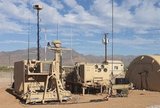
POPRAD equips brigades and regiments in Poland (photo - Polish MoD Armament Inspectorate)
The Polish MND Armament Inspectorate has announced the delivery of the last units of the self-propelled anti-aircraft missile system POPRAD.


The Polish Ministry of National Defence (MND) Armament Inspectorate announced on 15 December the delivery of the last nine self-propelled anti-aircraft missile systems POPRAD. The very short-range air defence (VSHORAD) solution was manufactured by PIT-Radwar S.A. and acquired in December 2015.
POPRAD was designed to operate in the lowest tier of air and missile defence and can detect, identify and combat air targets at close distances.
It features ultra-short-range MESKO Grom anti-aircraft missiles and its modernised versions Piorun. The missiles are placed on the transport compartment of the AMZ-Kutno Żubr vehicle.
In total, Poland purchased 79 POPRADs, which are spread throughout the country equipping mechanised and rifle brigades as well as anti-aircraft regiments. These systems were first handed over in 2018.
The Armament Inspectorate also reported on 16 December the delivery of six KTO Rosomak command vehicles acquired in December 2020. These platforms will equip the 16th Mechanised Division and support operations to protect the Polish-Belarusian border.
Early this year, Poland also received a batch of 25 LPU Wirus-4 light strike vehicles (LSVs) to patrol the area.
Related Equipment in Defence Insight




More from Land Warfare
-
![Polaris expands Arctic mobility offering as US military orders grow]()
Polaris expands Arctic mobility offering as US military orders grow
The Military 850 Voyageur 155 Crossover has secured orders from the US Army, Air Force and Marine Corps, addressing demand for agile Arctic mobility with passenger, cargo and towing capacity.
-
![Northrop Grumman pushing ahead with smaller Integrated Battle Command System]()
Northrop Grumman pushing ahead with smaller Integrated Battle Command System
Northrop Grumman’s Integrated Battle Command System is in service with Polish forces and is being introduced to US forces, with further development underway on the original platform as well as a smaller, more mobile system.
-
![UK’s ground-based air defence effort remains in assessment phase after third industry day]()
UK’s ground-based air defence effort remains in assessment phase after third industry day
The UK’s plan to introduce a new air defence capability into the British Army will cover short and medium-range defence as well as counter-uncrewed aerial system systems. Timelines are not yet laid out but industry is making plans.