Pacific 2017: Land 400 missiles slug it out


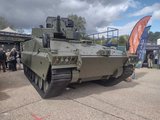
While Rheinmetall’s Boxer and BAE Systems’ AMV35 8x8 armoured vehicles are duking it out to win a contract from the Australian Army under Project Land 400 Phase 2, another battle is going on to supply associated antitank guided missiles (ATGM).
The main contenders were out in force at the Pacific International Maritime Exposition in Sydney, with Lockheed Martin/Raytheon’s Javelin, MBDA’s MMP and Rafael’s Spike considered the frontrunners.
The tried-and-tested Javelin is already in service with the Australian Army as a man-portable weapon, plus it has the advantage of interoperability with the US. Certainly, the latter factor can never
Our news & analysis is now part of Defence Insight®
A Basic-level or higher Defence Insight subscription is now required to view this content.



More from Land Warfare
-
![KNDS points RCH 155 towards longer-range artillery future]()
KNDS points RCH 155 towards longer-range artillery future
KNDS Deutschland has fitted a tracked RCH 155 with a new KNDS France 155mm/58cal ordnance, opening a potential path towards significantly longer-range artillery and a future beyond the current NATO standard.
-
![Air defence offerings multiply in anticipation of emerging requirements]()
Air defence offerings multiply in anticipation of emerging requirements
Air defence and counter-drone weapons continue to be developed, tested and demonstrated in anticipation of growing demand, with most solutions designed to be platform-agnostic and readily integrated onto suitable platforms.
-
![BAE Systems looks beyond the M113 replacement as it tests 30mm AMPV]()
BAE Systems looks beyond the M113 replacement as it tests 30mm AMPV
The development demonstrates how the platform could provide additional firepower and growth potential while the US Army progresses its long-term replacement for the Bradley.