PAC-3 MSE sets distance record in intercept test


Lockheed Martin’s PAC-3 Missile Segment Enhancement (MSE) interceptor has successfully intercepted an air-breathing threat (ABT) in a test at White Sands Missile Range, New Mexico, the company announced on 26 July.
The test marked the furthest distance a PAC-3 MSE missile has intercepted an ABT. The US Army-led missile defence flight test demonstrated the hit-to-kill capability of the PAC-3 family of missiles, which defends against threats through body-to-body contact.
The test also reconfirmed the high-velocity interceptor PAC-3 MSE’s ability to detect, track and intercept incoming ABTs, which represent fixed-wing aircraft or cruise missiles.
Jay Pitman, VP of PAC-3 programmes at Lockheed Martin Missiles and Fire Control, said: ‘PAC-3 MSE continues to be successful against today’s evolving threats and this most recent test validates its effectiveness at extreme distances.
‘Today’s global security environment demands reliable solutions. We expect PAC-3 hit-to-kill interceptors to continue serving as an essential element in integrated, layered defence systems.’
Related Equipment in Defence Insight


More from Land Warfare
-
![AUSA 2026: Hanwha receives howitzer top-up order to meet US Army’s fast delivery demand]()
AUSA 2026: Hanwha receives howitzer top-up order to meet US Army’s fast delivery demand
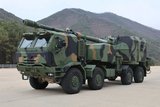
Less than two months after winning a contract from the US Army for six prototype K9 mobile howitzers, Hanwha Defense USA has received an order for another three. The company will show a platform at AUSA 2026.
-
![KNDS points RCH 155 towards longer-range artillery future]()
KNDS points RCH 155 towards longer-range artillery future
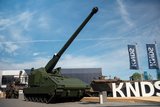
KNDS Deutschland has fitted a tracked RCH 155 with a new KNDS France 155mm/58cal ordnance, opening a potential path towards significantly longer-range artillery and a future beyond the current NATO standard.
-
![Companies downselected for British Army vehicle programme]()
Companies downselected for British Army vehicle programme
It is believed that three companies did not make the downselect but a dark horse in Spain’s Iturri is believed to have got through.