Oshkosh receives JLTV, HEMTT contracts


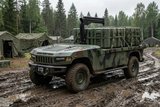
Oshkosh Defense has been officially awarded an over $243 million order by the US Army for the Joint Light Tactical Vehicle (JLTV) programme, it announced on 23 March.
The order includes 657 vehicles, 2,977 installed kits and related support for the army and marine corps and comes after Lockheed Martin withdrew its protest in February.
Under the JLTV production contract, Oshkosh will supply nearly 17,000 vehicles, along with installed kits, trailers and services, over eight years. The first vehicle delivery is scheduled for October 2016, with completion expected by the first quarter fiscal year 2018.
Oshkosh Defense also announced on 24 March that it has received a more than $430 million contract from the US Army to recapitalise 1,212 Family Of Heavy Tactical Vehicles (FHTV) and manufacture 345 trailers. The company will upgrade the army’s fleet of Heavy Expanded Mobility Tactical Trucks (HEMTT) and Palletised Load Systems (PLS) to provide the same performance and life cycle cost advantages as new production vehicles.
The Oshkosh HEMTT is part of the army logistics fleet and has a 13-ton payload, with different variants for various operations. The HEMTT A4 is its latest configuration, with claimed improvements in power, maintenance and safety. The Oshkosh PLS A1 is used to deliver ammunition and other critical supplies. The latest configurations of FHTV trucks include armour-ready, air-conditioned cabs, anti-lock braking and electrical upgrades.
All the work for the latter contract will be completed in Oshkosh, Wisconsin, with deliveries scheduled to commence from 2016 to 2017.
Related Equipment in Defence Insight


More from Land Warfare
-
![Can NATO’s CUAS marketplace turn urgent demand into deliveries?]()
Can NATO’s CUAS marketplace turn urgent demand into deliveries?
Framework contracts and leasing options aim to shorten acquisition timelines, while manufacturing partnerships could help suppliers scale production to meet allied demand.
-
![A medium UGV market emerges as the US weighs up its options]()
A medium UGV market emerges as the US weighs up its options
The US is pursuing multiple UGV programmes, from commercial robotic platforms to new autonomy technologies. The combination of these efforts could prove key to turning ambition into operational capability.
-
![NATO looks for answers to overcome standards hurdles and improve procurement]()
NATO looks for answers to overcome standards hurdles and improve procurement
NATO is looking to artificial intelligence to provide integration between different C2 systems to create a common operational picture, potentially offering a faster route to interoperability than the slow-moving processes of NATO standards committees.
-
![NATO FUSE exercise plays out real-world scenario in the face of eastern border risks]()
NATO FUSE exercise plays out real-world scenario in the face of eastern border risks
The large-scale exercise in Latvia was the culmination of three experimentation initiatives to see how platforms, weapons and systems could fit into the alliance’s Eastern Flank Deterrence Initiative. As well as forces, it brought together companies and equipment.
-
![Canada accelerates uncrewed aerial system procurement for NATO and Arctic forces]()
Canada accelerates uncrewed aerial system procurement for NATO and Arctic forces
Canada plans to acquire at least 120 uncrewed aerial systems through two competitions with combined funding ceilings of C$32 million.