


FNSS advances Indonesian Kaplan APC programme as local production expands
FNSS and PT Pindad are progressing the Indonesian tracked armoured personnel carrier programme as local production gets under way.


Northrop Grumman will begin low-rate initial production (LRIP) of AN/TPS-80 Ground/Air Task Oriented Radar (G/ATOR) systems under a $207 million contract from the US Marine Corps, announced on 28 October.
G/ATOR is a ground-based multi-mission active electronically scanned array (AESA) radar designed for air surveillance, air defence, ground weapon locating and air traffic control capabilities.
Jeffrey Palombo, vice president and general manager, Land and Self Protection Systems Division, Northrop Grumman Electronic Systems, said: ‘G/ATOR will fundamentally change how the marines deploy and fight. Evidenced by the mission capabilities proven during operational testing, the marines will have an unprecedented degree of protection and situational awareness.’
This LRIP contract has been awarded following extensive testing, operational assessment and a production readiness review. The system reached a successful Milestone C in January as part of the formal US Department of Defense acquisition process, which resulted in the recommendation to enter LRIP.
Northrop Grumman will deliver the systems in 2016-17, with additional LRIP contracts anticipated, followed by multiyear, full-rate production.
Additional funding will also be placed on contract to incorporate new software-based capabilities for this multi-mission radar system. G/ATOR’s total program value could exceed $2 billion.

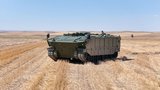
FNSS and PT Pindad are progressing the Indonesian tracked armoured personnel carrier programme as local production gets under way.
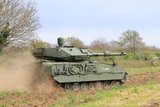
Firing trials of the Tulpar and Leonardo Hitfact Mk II combination follow an integration programme covering mechanical, electrical, electronic and software interfaces.

The news from Ukraine has again shown that antitank minefields and other obstacles on the battlefield, such as deep trenches, can play a key role in both offensive and defensive operations. Given this, there will always be a need to clear them, both during and after a conflict.
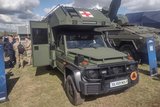
The UK Ministry of Defence has avoided being prescriptive in its search to replace the British Army’s Land Rover, meaning vehicle types being offered range from Land Rover Defender Wolf II and Humvee to the hybrid series Fering Pioneer. What does this mean for the procurement process?

The introduction of Ajax vehicles into British Army service was stopped after operator health issues were reported during an exercise, but manufacturer General Dynamics Land Systems UK believes work over the past 10 months has dealt with the problems.

Sweden, Croatia and France are pursuing different rocket artillery solutions as European armies seek greater reach, survivability and industrial resilience.

Connect with us on socials


