


Companies downselected for British Army vehicle programme
It is believed that three companies did not make the downselect but a dark horse in Spain’s Iturri is believed to have got through.


The US Marine Corps has awarded a contract to Northrop Grumman to develop and test the Ground Weapon Locating Radar (GWLR) mode for the AN/TPS-80 Ground/Air Task-Oriented Radar (G/ATOR), the company announced on 12 October.
The contract is valued at around $59 million.
The GWLR mode is a software update, which brings additional mission capability to the Department of Defense’s ground-based multi-mission Active Electronically Scanned Array (AESA) radar. The software enables the same radar hardware to operate in four different modes, switching between air surveillance, air defense, ground weapon locating, and air traffic control as required by the operator.
G/ATOR will be able to detect and track time-critical incoming threats such as rockets, mortars and artillery rounds using GWLR mode. Once the incoming threats are detected by the radar, the system rapidly analyses their ballistic trajectories and computes their impact points to enable rapid and accurate threat engagement by counterfire forces.
Roshan Roeder, director, ground based tactical radars, land and self-protection systems division, Northrop Grumman Electronic Systems, said: ‘Inserting this capability into G/ATOR is an important step toward providing the marines with a highly capable and highly versatile system.
‘Using an open architecture approach, we’re bringing together the best of technology and design experience from ground and airborne applications to create a system that seamlessly facilitates capability upgrades and the insertion of emerging technologies.’


It is believed that three companies did not make the downselect but a dark horse in Spain’s Iturri is believed to have got through.
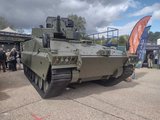
Air defence and counter-drone weapons continue to be developed, tested and demonstrated in anticipation of growing demand, with most solutions designed to be platform-agnostic and readily integrated onto suitable platforms.
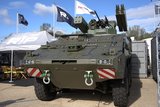
The US Army began its search for a 155mm tracked mobile tactical cannon in an effort that Shephard forecasts could be worth billions of dollars. Meanwhile, the UK DVD exhibition saw companies showcase their offerings for the British Army’s mobility and air defence requirements.

The development demonstrates how the platform could provide additional firepower and growth potential while the US Army progresses its long-term replacement for the Bradley.

FNSS and PT Pindad are progressing the Indonesian tracked armoured personnel carrier programme as local production gets under way.
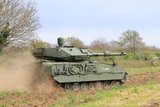
Firing trials of the Tulpar and Leonardo Hitfact Mk II combination follow an integration programme covering mechanical, electrical, electronic and software interfaces.

Connect with us on socials


